
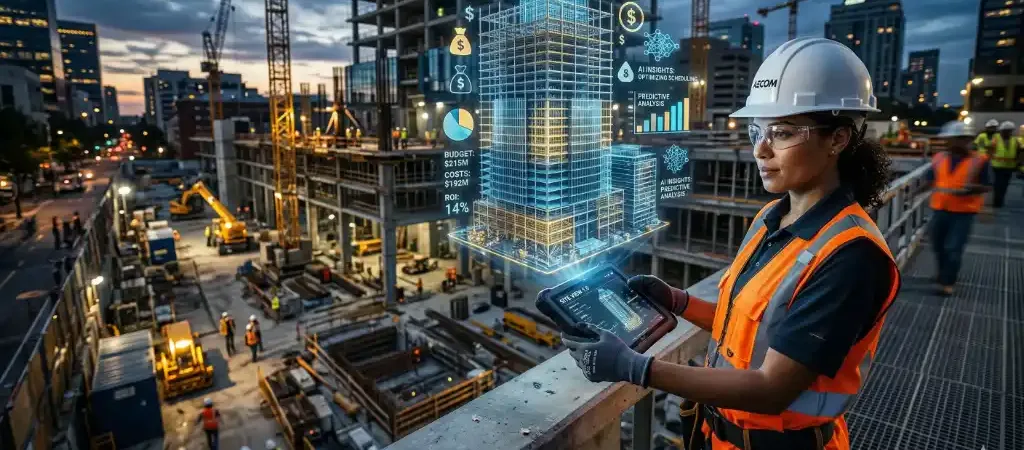
In the world of construction, cost estimation for large-scale projects is an incredibly complex and time-consuming process. Traditionally, it involved sifting through massive amounts of data, laborious calculations, and the expertise of seasoned estimators. However, with the advent of Agentic AI, this process has become significantly more efficient and accurate. In this article, I’ll explore how I leverage Agentic AI to automate cost estimation for construction projects, ensuring precision and saving valuable time.
Understanding Agentic AI
Agentic AI is an advanced form of artificial intelligence designed to perform specific tasks with a high degree of autonomy. Unlike general AI, which is broader and more generalized, Agentic AI is tailored to execute particular functions, making it ideal for specialized tasks like cost estimation in construction.
Key Features of Agentic AI
- Data Integrity: It ensures the accuracy and consistency of the data processed. Agentic AI is only as good as the data it handles, so maintaining clean, structured historical records is vital to avoid the “Garbage In, Garbage Out” trap.
- Human-AI Collaboration: It operates best within a “Human-in-the-Loop” framework. The AI acts as an augmentation tool rather than a total replacement, allowing human experts to oversee outputs and handle unpredictable on-site variables.
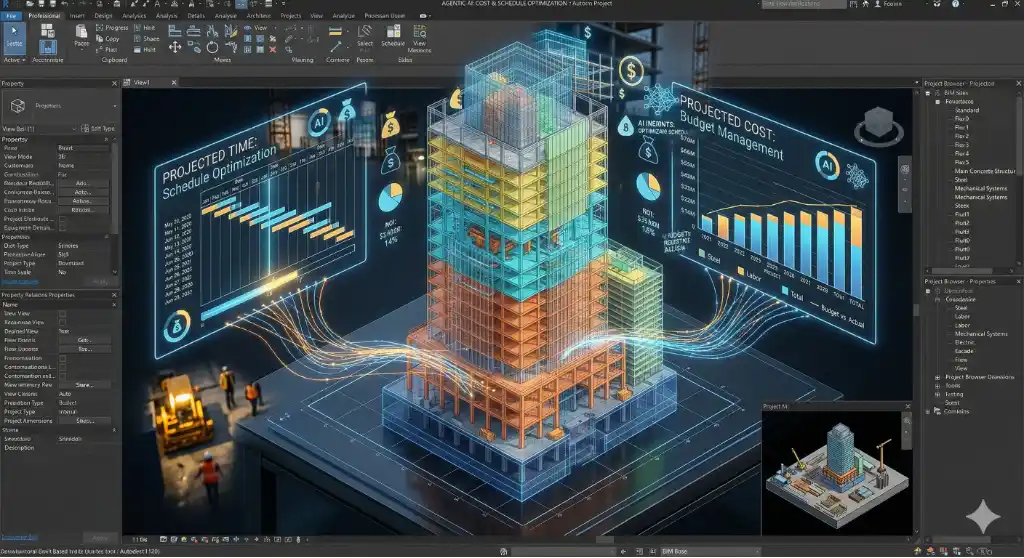
- BIM Synergy: It can be integrated with Building Information Modeling (BIM) to enable advanced 5D cost estimation, where costs and schedules are dynamically linked to the 3D model.

Automating the Estimation Process
Step 1: Data Collection and Integration
The first step in automating construction cost estimation is gathering and integrating multi-source data. Agentic AI excels at pulling information from multiple databases, including historical costs, supplier price lists, and current labor rates. By prioritizing Data Integrity at this stage, the AI ensures that the foundation of the estimate is reliable and verified against real-time market fluctuations in regions like the US and UK.
Step 2: Analyzing Project Specifications
The AI analyzes specific requirements by evaluating architectural plans and engineering drawings. Through BIM Integration, any change in the digital 3D model can automatically trigger a recalculation of the required materials and associated costs. This removes the manual “take-off” process that usually takes weeks, reducing it to mere hours.
Step 3: Predictive Cost Modeling
Agentic AI utilizes predictive algorithms to model potential costs, considering factors like material volatility and labor rates. By identifying patterns in global supply chains, the AI generates a detailed estimate, highlighting key expenditure areas while identifying potential financial risks before they manifest on-site.
Step 4: Scenario Analysis and Optimization
One of the most significant advantages is scenario analysis. By simulating different “what-if” scenarios, the AI provides insights into how price fluctuations or labor shortages impact the budget. This is where Human-AI Collaboration shines, as project managers use these AI insights to make high-level strategic decisions regarding procurement and resource allocation.
Why Automating Construction Cost Estimation Matters
Enhanced Accuracy and Efficiency
The primary benefit of automating construction cost estimation is the elimination of human errors. In large-scale projects, even a 1% error in estimation can lead to millions in losses. AI precision ensures that every bolt, beam, and labor hour is accounted for with mathematical certainty.
Scalability and Competitive Edge
Agentic AI is highly scalable, making it suitable for everything from single-unit developments to massive infrastructure projects. For firms operating in competitive markets, the ability to produce fast, accurate bids provides a significant edge in winning contracts and maintaining healthy profit margins.
visit the Construction Management Association of America
Improved Decision-Making and Risk Mitigation
With access to data-driven insights and 5D modeling, project managers can move from being reactive to proactive. By understanding the cost implications of design changes instantly, the synergy between human intelligence and AI capabilities leads to better resource management and overall project success.
Benefits of Using Agentic AI
- Enhanced Accuracy and Efficiency: By automating the heavy lifting, the AI eliminates human errors and significantly reduces the time required to generate complex estimates.
- Scalability: Agentic AI is highly scalable, making it suitable for everything from single-unit developments to massive infrastructure projects.
- Improved Decision-Making: With access to data-driven insights and 5D modeling, project managers can optimize resource allocation and ensure project success.
Conclusion
Incorporating Agentic AI into the workflow for automating construction cost estimation has been transformative for my projects. It not only streamlines operations but also enhances the strategic capabilities of the entire team. As the construction industry continues to evolve, leveraging technologies like Agentic AI and BIM will be essential for staying competitive, reducing waste, and delivering successful projects on time and within budget.