
Passive Income Ideas 2025: A Complete, Practical Guide to Earning While You Sleep
(Educational content — not financial advice)
If you want money to keep working when you’re not, you’re thinking about passive income. Done right, it’s not a fantasy—it’s a portfolio of systems that spin off cash with limited ongoing effort. This guide covers what passive income is (and isn’t), the smartest passive income ideas 2025, how to choose streams that fit your skills and risk, and the exact steps to launch, validate, and scale.
Table of Contents
1) What Passive Income Really Means
Passive income is money earned with little ongoing effort after an initial setup. For a solid primer, see Investopedia: Passive Income. Unlike active income (a salary or hourly work), passive streams continue to generate revenue with minimal daily involvement. In 2025, creators and investors use digital assets, automation, and capital-efficient platforms to diversify beyond a single paycheck.
Quick distinction resource: the U.S. SEC’s Investor.gov offers plain-English guidance to help you evaluate investments and risk before you commit capital.
Why It Matters in 2025
Multiple income streams can improve resilience against job loss, slow seasons, or inflation. Whether it’s royalties from digital products, rent-like distributions from real-estate vehicles, or yield from insured deposits, the aim is predictable cash flow without a second full-time job.
2) Passive vs. Active Income (and Hybrids)
- Active income: trade time for money (hourly, salaried, freelancing). Control is high, but time-bound.
- Passive income: systems earn for you (rent, royalties, product sales, dividends). Requires monitoring rather than constant labor.
- Hybrid: a setup phase and light ongoing input (e.g., content that earns from affiliates; rental with property manager).
Think portfolio: a few passive streams, one hybrid you enjoy, and active income you control.
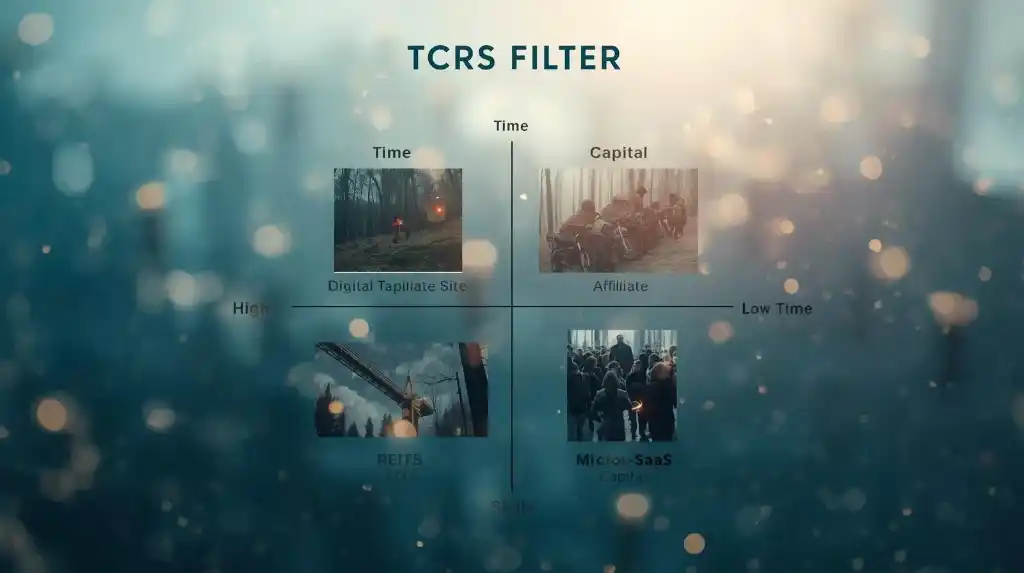
3) How to Choose the Right Stream: Time, Capital, Risk, Skills
Use the TCRS filter:
- Time: upfront build vs. weekly maintenance
- Capital: $0–$500 (lean digital) vs. $5k–$50k+ (property, dividend portfolios)
- Risk: market, platform, legal, operational
- Skills: writing, design, video, coding, sales, ops
Pick two streams—one digital, one financial—so you diversify both cash flow and risk.
4) The Best Passive Income Ideas 2025 (by category)
A) Financial & Real Estate
- Dividend stock portfolios (broad ETFs or dividend aristocrats)
- REITs (public) and fractional real estate platforms
- High-yield savings accounts & CDs (low risk, modest yield)
- Bond ladders & Treasury funds (income + stability)
B) Digital Products & Intellectual Property
- E-books, templates, presets, coding libraries
- Online courses & cohort replays (evergreen versions)
- Licensing stock media (photos, video, audio, 3D)
- Micro-SaaS or simple paid apps
C) Content & Media Monetization
- Niche websites with affiliate marketing
- YouTube automation (faceless channels)
- Newsletters with sponsorships
- Print-on-demand (POD) merch
D) Marketplaces & Royalties
- Design marketplaces (fonts, icons, UI kits)
- Music royalties & beat stores
- Domain parking and leasing
Note: Some ideas (e.g., P2P lending, crypto staking) carry higher risk. Approach cautiously, diversify, and understand counterparty/platform risks.
5) Deep Dives: 10 Proven Streams and How to Start
5.1 Dividend Portfolios (ETFs or blue-chip dividends)
Dividends are company profits shared with shareholders. New to the concept? Read Dividend Basics (Investopedia). In practice, many investors buy broad, low-cost index funds or dividend-focused ETFs and automate contributions. For a free education hub on costs, diversification, and compounding, see Vanguard: Investing Education.
How it becomes passive: automate monthly buys; reinvest dividends; review allocations quarterly rather than babysitting positions daily.
5.2 REITs & Fractional Real Estate
REITs pool investor money to own income-producing property and pay out most earnings as dividends. Start with What is a REIT? (Nareit) and the regulatory view from the SEC on REITs. REITs spare you tenant calls while still providing real-estate exposure.
Why many like them: liquidity (public REITs trade like stocks), built-in diversification, and often steady distributions.
5.3 Digital Products (e-books, templates, presets)
Create once, sell repeatedly. Marketplaces help with checkout, VAT/sales tax, and file delivery. A popular choice is Gumroad for creators selling downloadable products and licenses.
Tip: bundle small, valuable assets (e.g., Notion templates + walkthrough PDF) and iterate from customer feedback.
5.4 Online Courses (evergreen)
Codify your expertise into a self-paced course and let a platform handle payments, student access, and video hosting. See Teachable for a straightforward course stack.
Make it passive: drip lessons, automate onboarding emails, and run quarterly promotions instead of continuous launches.
5.5 Affiliate Niche Sites
Recommend products you genuinely use. Disclose relationships to comply with the FTC Endorsement Guides (U.S.) and check local rules (U.K. readers: see FCA Consumers). Content can rank for buyer-intent keywords; earnings accrue via tracked links.
SEO basics: apply Google’s SEO Starter Guide to improve discoverability.
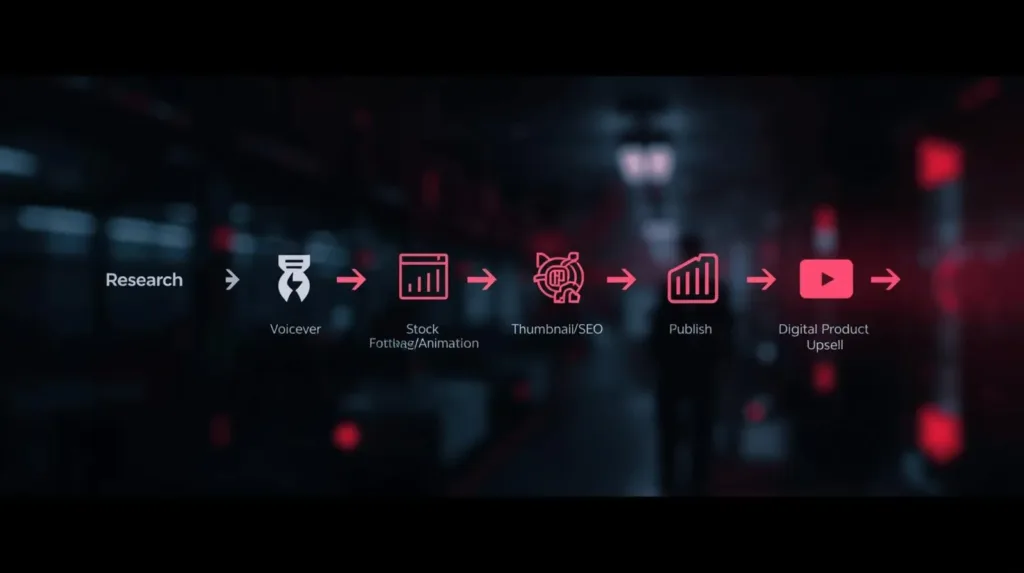
5.6 YouTube Automation (faceless)
Batch-produce evergreen videos (explainers, tutorials, listicles). Pair scriptwriting, voiceover, and editing systems so publishing continues while you sleep. Disclose sponsorships per FTC guidance.
Monetization mix: AdSense + affiliate links + digital product upsells.
5.7 Print-on-Demand (POD)
Design merch; a fulfillment partner prints and ships on demand. Explore Printful for production, warehousing, and integrations with storefronts.
Passive levers: evergreen designs, seasonal refreshes, and automated store ads with careful caps.
5.8 Licensing Stock Media
Upload once, license many times. Learn contributor rules, model/property releases, and payout terms:
What sells: authentic, well-lit visuals with clear subjects; keywording and metadata matter for search.
5.9 Micro-SaaS / Paid Apps
Why it works: recurring revenue for a single sharp pain point.
Steps:
- Implement one feature brilliantly (e.g., invoice reminder automation).
- Ship fast with no-code/low-code; price simply.
- Support async; document well; roadmap transparently.
Maintenance: bug fixes + tiny features monthly.
5.10 High-Yield Savings & Bond Ladders
For lower-risk cash flow:
- U.S. deposit insurance basics: FDIC Deposit Insurance
- Buy U.S. Treasuries direct: TreasuryDirect
Passive angle: automatic transfers to a HYSA; schedule CD/T-Bill ladders for maturities that match cash needs.
6) Unit Economics: How the Money Actually Flows
Example A: Digital Template
- Price: $29
- Conversion rate: 2% on 3,000 monthly pageviews = 60 sales
- Monthly revenue: 60 × $29 = $1,740
- Paid traffic (example): $400 in ads → net ≈ $1,340 before platform fees/taxes.
Example B: Affiliate Niche Site
- 25 articles, 15k organic visits/month
- Click-through to merchants: 8% (1,200 clicks)
- Conversion at merchants: 6% (72 sales)
- Avg. commission: $18 → $1,296/month (+ display ads $200–$400)
Example C: Dividend Portfolio
- $40,000 in dividend ETF at 3% yield → $1,200/year (reinvest until needed)
- At 8% total return compounded, time becomes the driver.
The point: do the math up front and iterate to reach an attractive profit per hour of maintenance.
7) Tools & Platforms (by stream)
- Brokerage/REITs: Vanguard, Fidelity, Schwab (low fees)
- Digital products: Gumroad, Shopify, Lemon Squeezy
- Courses: Teachable, Podia, Kajabi
- Affiliate sites: WordPress + Rank Math/Yoast, Ahrefs/SEMrush, Cloudflare CDN
- YouTube automation: Descript/Captions, Premiere/CapCut, Thumbnail tools (e.g., Figma), TubeBuddy
- POD: Printful/Printify + Etsy/Shopify
- Stock media: Adobe Stock, Shutterstock, Pond5, Artlist (music)
- Micro-SaaS: Bubble, Supabase, Stripe, Paddle
- Finance: High-yield banks (US/UK), TreasuryDirect (US), Money market funds (brokerage)
(Choose tools you’ll actually use; simplicity beats sprawling stacks.)
8) Legal, Tax & Compliance Basics (US/UK — high level, not advice)
- U.S. taxes & records: IRS Small Business & Self-Employed
- U.K. tax wrappers (ISAs): HMRC: ISAs
- Endorsements/disclosures: FTC Endorsement Guides (U.S.)
- Consumer/marketing fairness: UK FCA: Consumers
Always keep clean records and disclosures. Tax wrappers (e.g., ISAs in the UK) and compliant structures can materially change long-term outcomes.
9) Risk, Pitfalls & How to Avoid Them
- Platform risk: diversify (don’t rely on one marketplace).
- Fee drag: expense ratios and platform cuts reduce net yield—compare options.
- SEO/algorithm dependency: mitigate with email lists and multi-channel presence.
- Liquidity: REITs/public ETFs are liquid; private real estate or crowdfunding may not be.
- Compliance: affiliate disclosures and advertising standards aren’t optional—review the FTC and FCA notes.
10) Scaling: Automation, SOPs, and Delegation
- Automation: scheduled posts, email sequences, invoice reminders, inventory sync.
- SOPs: step-by-step docs for content creation, uploads, metadata, support.
- Delegation: outsource thumbnails, edits, metadata, customer support.
- Flywheels: affiliates for your products; newsletter swaps; cross-selling bundles.
Aim for a system where your role is strategy + quality control, not every keystroke.
11) Case Studies (hypothetical but realistic)
Creator A (Templates):
Built 3 Notion templates over 6 weekends. Blog traffic hit 5k/month; conversion 1.8%. Now ~$900/month with quarterly updates (6 hrs/quarter).
Team B (YouTube Automation):
Two partners—scripts/VO + editing/thumbnails. Niche: “Office gear explainers.” 2 videos/week. Month 7: ads $650 + affiliates $1,400 = $2,050/month.
Investor C (REIT + HYSA):
Kept 6 months’ expenses in HYSA; dollar-cost averaged into two REIT ETFs for yield. Reinvested distributions; plans to tap income in 5–7 years.
Designer D (POD + Stock):
Uploads 10 designs/week to POD; 25 stock photos/week to 3 libraries. Month 8: $650 POD + $320 stock media royalties; scales by outsourcing background removal.
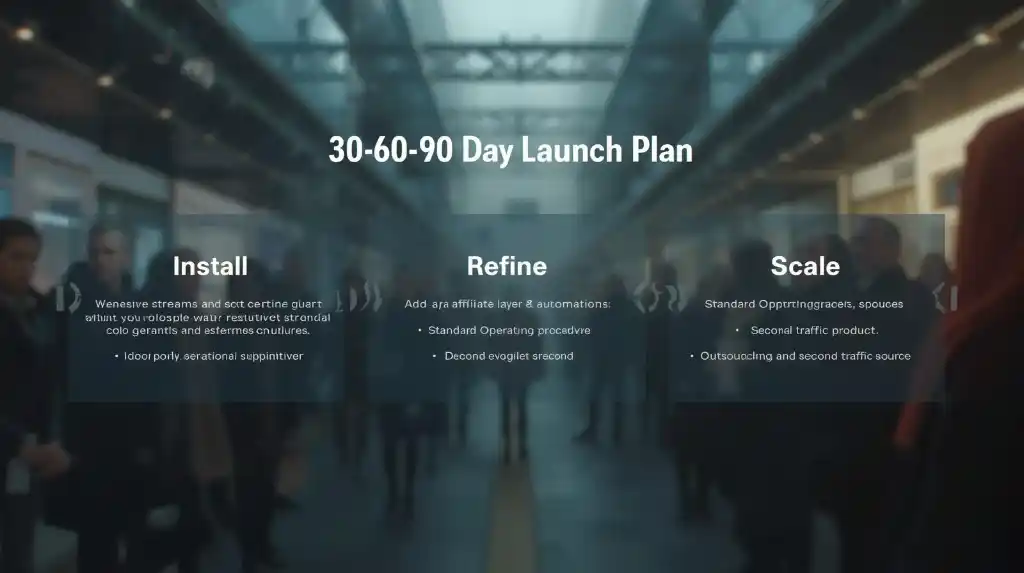
12) 30-60-90 Day Launch Plan
Days 1–30 (Install)
- Pick two streams (one digital, one financial).
- Validate your first product/topic with 10 real conversations or 100 survey responses.
- Set up infrastructure: domain, landing page, payment, newsletter, analytics.
- Draft your first asset (template, 5 articles, or 4 videos). Ship V1.
Days 31–60 (Refine)
- Publish weekly; gather feedback; improve offer/positioning.
- Add affiliate layer or an entry-level digital product.
- Automate basics: email welcome, lead magnet, abandoned cart (if e-com).
Days 61–90 (Scale)
- Create SOPs; outsource one task (thumbnails, editing, formatting).
- Launch a second product variation or bundle.
- Add a second traffic source (newsletter swaps, partnerships, short-form clips).
- Review KPIs: traffic, conversion, AOV, LTV; set next 90-day targets.
Consistency over intensity wins.
13) FAQ: Straight Answers
Q: Is passive income really “set and forget”?
A: Rarely. It’s “set, optimize, and maintain.” The goal is low ongoing effort, not zero.
Q: How much money do I need to start?
A: Digital streams can start at $0–$200 (hosting, tools). Financial streams range from $500 to many thousands. Start where you are.
Q: What’s the fastest passive income idea in 2025?
A: “Fast” is risky. The most reliable is pairing a simple digital product with organic content or a small paid test, plus a conservative financial stream (HYSA/REIT ETF).
Q: Do I need to show my face for YouTube?
A: No—faceless formats (voiceover + stock/animation) work. Quality scripting and thumbnails matter most.
Q: How many streams should I build?
A: Start with one. Earn your first $100/month, then duplicate the playbook.
14) Conclusion & Next Step
Passive income is a system, not a secret. In 2025, the cleanest approach is to pair one digital asset (a template, course, or niche site) with one financial income stream (dividends or REITs), then layer on automation and distribution.
Your 10-minute next step:
- Pick two streams from this guide and write why they fit your skills, budget, and risk tolerance.
- Block two 90-minute sessions this week to build your first asset.
- Open/confirm a low-fee brokerage; automate a small monthly contribution.
Start small, stay consistent, and let compounding—of money and effort—do the heavy lifting.