

AI Revolution 2025: The Invisible Transformation of Work, Travel, and Everyday Life
Introduction: What the “AI Revolution 2025” Really Means
The AI revolution 2025 isn’t just about flashy chatbots or viral image generators. It’s a quieter, deeper shift driven by invisible systems that hum in the background, improving outcomes across work and life. These systems optimize routes before you ask, surface the right documents before meetings begin, and flag equipment issues before anyone notices a problem. The result is less friction, more focus, and better decisions—often without a visible interface The AI revolution 2025 is already shaping outcomes in ways most people don’t see.
See the NIST AI Risk Management Framework for practical, organization-ready guardrails.
The OECD AI Principles summarize a global baseline for trustworthy AI
.
In 2025, these invisible AI applications form a critical backbone inside many industries. They streamline processes, cut cycle times, and enhance user experiences beyond initial expectations. Most people won’t see the models or pipelines. They’ll simply feel that everything is faster, smoother, and more personal.
This article maps that change. We’ll explore how agentic tools empower freelancers, how “old” industries like brewing and beekeeping quietly modernize, how travel moves from search boxes to proactive planning, and how productivity gets a structural lift. We’ll address common myths, outline practical skills, and offer checklists for getting ready. Short, scannable sections keep things human and useful—because the true test of progress is not jargon; it’s a better day.
The Invisible Backbone: How AI Works Behind the Scenes
Invisible AI operates inside the flows you already use. It sits in calendars, email, CRMs, ERPs, and logistics tools. It listens for signals, runs predictions, and nudges the next best action. Most value comes from three capabilities:
Sensing: Collecting signals from text, clicks, sensors, and context.
Reasoning: Turning signals into prioritized tasks, decisions, or alerts.
Acting: Scheduling meetings, drafting replies, re-ordering inventory, or changing a machine’s settings.
These capabilities are increasingly agentic. Instead of waiting for prompts, agents work from goals and constraints. They can read a brief, assemble resources, propose a plan, and execute steps autonomously—while keeping you in the loop for approvals. The interface is often minimal: a notification that the work is already done.
AI Revolution 2025: Your Personal AI Army—from Freelancer to Entrepreneur
Freelancers and independents feel the shift first. They lack extra hands, so each marginal improvement matters. In the AI revolution 2025, “mini-agents” deliver leverage without headcount.

Administrative Relief
Inbox triage: Agents categorize, summarize, and draft responses.
Scheduling: Tools negotiate times across time zones and calendars.
Proposal assembly: Given a scope and past work, agents create a tailored deck or statement of work.
Client Operations
CRM hygiene: Notes from calls become structured records; follow-ups auto-generate with context.
Meeting prep: Agents surface prior emails, files, decisions, risks, and next steps—right before the call.
Retention loops: Sentiment analysis flags at-risk clients and suggests actions.
Finance and Compliance
Invoicing: Drafts with correct line items and dates; gentle reminders if payment slips.
Taxes: Categorization, receipt extraction, quarterly estimates, and year-end prep.
Cash flow: Forecasts identify dry spells early and recommend pricing or pipeline actions.
Growth and Discovery
Matching engines: Platforms analyze your portfolio and rates to recommend ideal gigs.
Content ops: Research, outlines, and first drafts that you refine instead of starting cold.
Personal knowledge base: Agents remember your voice, templates, and policies.
Bottom line: Independents build a personal AI team that handles repetitive tasks, ensures follow-through, and gives back hours for creative and billable work—not hype, real leverage for freelancers, the AI revolution 2025 turns mini-agents into real leverage, not hype.
AI Revolution 2025 in Traditional Industries: Brewing and Beekeeping
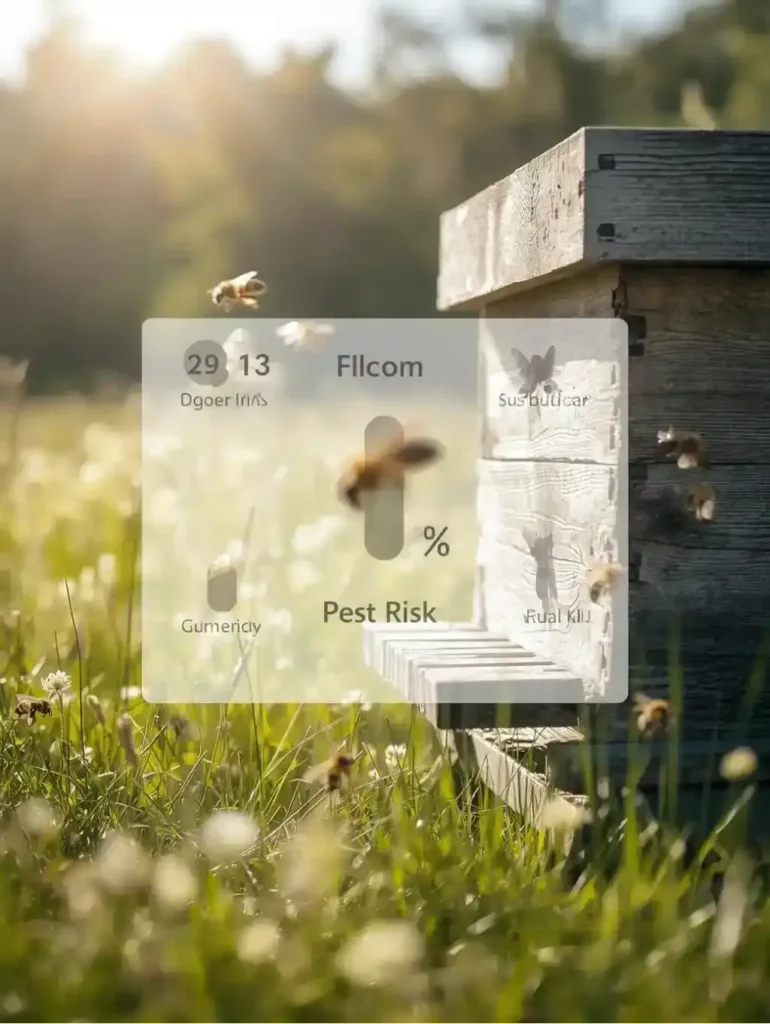
Some of the best AI stories happen where few people look.
Brewing: Craft, Consistency, and Prediction
Recipe modeling: Systems correlate grain bills, yeast strains, and temperatures with flavor outcomes. They propose small, testable tweaks that keep the brewer in control.
Process optimization: Agents regulate temperatures, timings, and cleaning cycles to reduce variability.
Quality and demand: Models align batches with demand forecasts, minimizing waste and stockouts.
The payoff is subtle but powerful: consistent flavor, fewer defects, and on-time deliveries. The brewer still leads; AI simply cuts noise.
Beekeeping: Small Signals, Big Outcomes
Hive monitoring: Sensors and audio analysis detect humidity shifts, queen issues, pests, or swarm precursors.
Predictive care: Alerts suggest interventions before colony health drops.
Ecological insight: Aggregated data reveals patterns in nectar flows, weather stress, and pesticide exposure.
Hive monitoring proves the AI revolution 2025 can be quiet, precise, and ecological. The work remains human and local; AI amplifies the keeper’s foresight.
In brewing and beekeeping, the AI revolution 2025 proves that quiet, precise, ecological wins add up.
AI Revolution 2025: From Travel Agent to Agentic AI
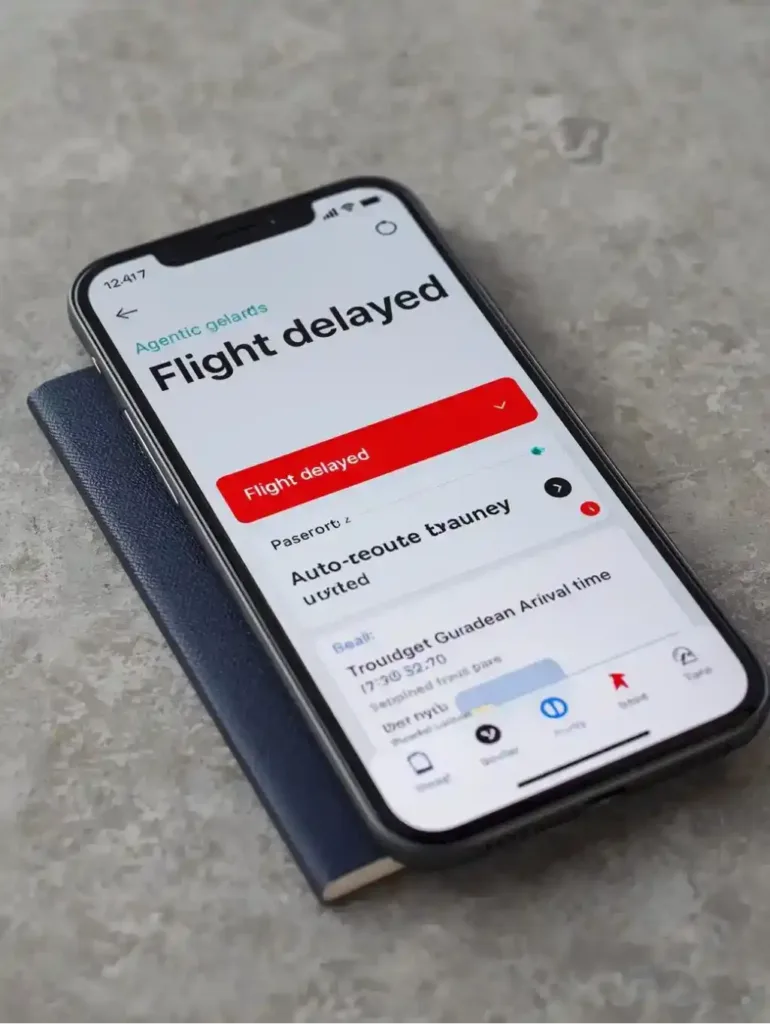
The AI revolution 2025 is shifting travel from search boxes to proactive agentic planning. Travel planning used to mean search tabs and spreadsheet chaos. Now, agentic systems build and maintain itineraries that fit your preferences, budget, and constraints.
From Search to Orchestration
Intent capture: “Three days in Kyoto, low noise, near transit, cherry blossoms if possible.”
Plan synthesis: Lodging near quiet neighborhoods; accessible transit cards; timed tickets to avoid crowds.
Active maintenance: Flight delays trigger rebooking; weather shifts suggest indoor options; budget guardrails keep costs in range.
Personalization at Scale
Agents learn your patterns: early flights, window seats, walkable neighborhoods, caffeine rituals. They remember loyalty numbers and seat maps. They warn about visa rules and suggest alternatives before friction appears.
Stress Down, Serendipity Up
Live rerouting, proactive notifications, and one-tap approvals reduce cognitive load. You spend less time coordinating and more time experiencing. That’s the quiet revolution.
AI as a Force Multiplier for Productivity
Think of productivity in three verbs: eliminate, automate, delegate.
Eliminate
Clutter control: Agents collapse duplicate threads, archive stale docs, and merge overlapping tasks.
Decision framing: Summaries surface the “why,” options, trade-offs, and a recommended path.
Automate
Routine workflows: Data entry, status updates, transcriptions, and approvals.
Monitoring: Systems watch SLAs, error rates, and customer satisfaction, then nudge the right owner.
Delegate
Agent chains: Research → outline → draft → review checklist → publish.
Retrieval on rails: Agents pull the exact paragraph, policy, or metric from your knowledge base and cite the source.
As a force multiplier, the AI revolution 2025 lets small teams deliver big outcomes. It doesn’t replace judgment. It gives judgment more leverage.
Addressing the Skepticism: Myths vs. Reality
Skepticism is healthy. Here’s what holds up—and what doesn’t.
Myth 1: “AI will take all the jobs.”
Reality: Tasks shift before jobs do. Repetitive steps get automated; human roles move toward oversight, creativity, and relationship work. New categories emerge around data quality, orchestration, and policy.
Myth 2: “AI acts alone and can’t be controlled.”
Reality: Well-run systems enforce approvals, logs, and guardrails. Human-in-the-loop checkpoints govern sensitive actions. Good design starts with reversibility and auditability.
Myth 3: “Bias makes AI unusable.”
Reality: Bias is real and must be managed. Diverse data, evaluation suites, and red-team reviews reduce risk. Measurement beats guesswork.
Myth 4: “It’s all hype.”
Reality: Some claims are exaggerated. Yet invisible wins—fewer delays, faster replies, smoother hand-offs—compound quietly. If your day feels less chaotic, that’s impact.
Much skepticism fades when the AI revolution 2025 is framed as augmentation, not replacement.
AI and the Redefinition of User Experience
User experience now includes what happens before you touch the screen.
Personalization that Respects Time
Recommendations arrive when you can act on them. The best systems consider context—device, location, schedule—and avoid notification spam. They feel timely, not needy.
Support Without the Queue
Chat assistants answer simple questions instantly and escalate nuanced issues to humans with full context. Hand-offs are seamless. You don’t repeat yourself.
Interfaces that Teach Themselves
AI spots confusing labels or dead ends and suggests copy or layout improvements. Accessibility benefits everyone: clearer language, better contrast, and logical focus order.
Personalized recommendations are the everyday face of the AI revolution 2025. When systems feel anticipatory but not intrusive, UX has evolved.
Preparing for an AI-Powered Future: Skills and Mindsets
Thriving in this era isn’t about memorizing model names. It’s about durable skills and habits.
Core Skills
Data literacy: Read charts, spot outliers, ask better questions.
Prompt craft and review: Give clear goals, constraints, tone, and examples; evaluate outputs with a checklist.
Process design: Break work into steps that agents can own; add approvals where risk is high.
Privacy and security hygiene: Least-privilege access, sensitive-data handling, and incident basics.
Collaboration: Communicate assumptions, write crisp briefs, and share learnings.
Skills for the AI revolution 2025 blend technical fluency with empathy and creativity. Soft skills matter more when machines handle the busywork.
A 30-60-90 Day Personal Plan
Days 1–30: Identify three friction points; pilot a single agent; document before/after.
Days 31–60: Automate one weekly workflow; add a review checklist; record time saved.
Days 61–90: Scale to a second workflow; create a playbook your team can reuse.
Make your progress visible. Share templates and lessons learned. Adoption spreads through useful examples, not mandates.
Governance, Risk, and Trust: Building Safely by Default
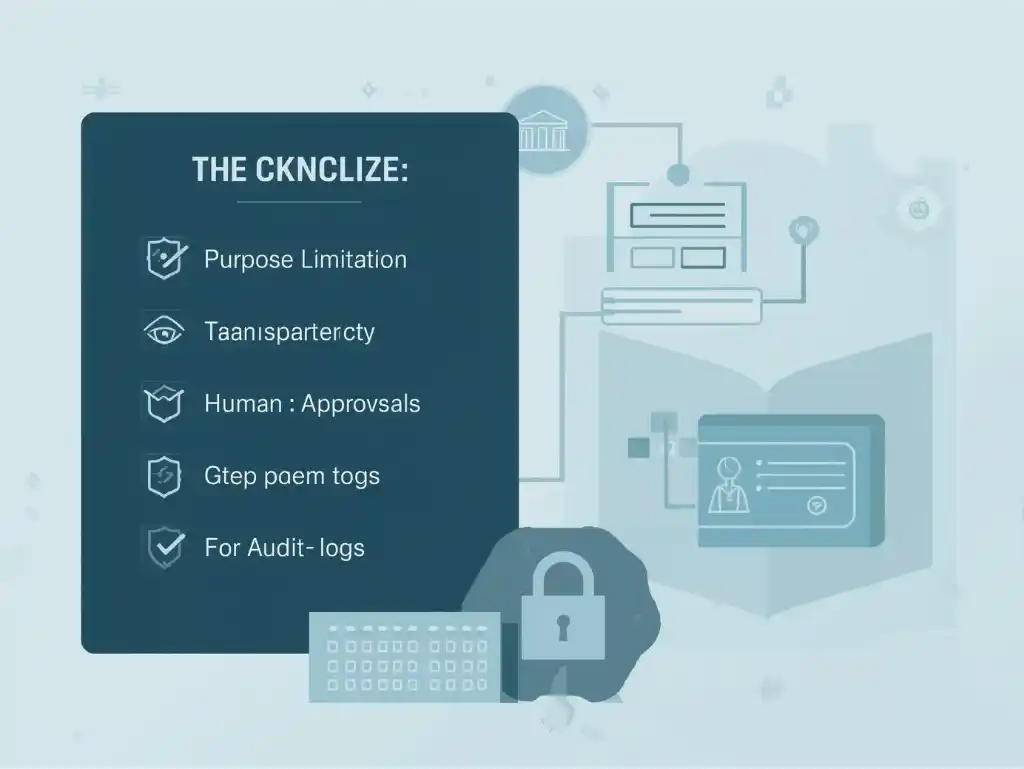
Trust is a prerequisite, not an add-on.
Principles
Purpose limitation: Tie data use to a clear, documented purpose.
Transparency: Make it easy to see what the system did and why.
Human agency: Keep humans in control of outcomes, especially in high-impact domains.
Security by design: Encrypt, log, and monitor from day one.
Practical Checklist
Define owners for data, models, prompts, and policies.
Map sensitive data and restrict access.
Add approval gates for actions that move money, change settings, or contact customers.
Test with adversarial prompts and red-team scenarios.
Measure impact and error rates; publish dashboards internally.
Good governance protects users and speeds adoption. When people trust the system, they use it—and the benefits compound.
Playbooks You Can Use Tomorrow
Freelancer or Solo Consultant
Goal: Win time for deep work and client care.
Moves: Inbox triage agent; proposal-from-template generator; automatic meeting briefs.
Metric: Hours saved weekly and response times.
SMB Founder or Ops Lead
Goal: Smoother hand-offs and fewer dropped balls.
Moves: Ticket summarization; customer intent detection; inventory or cash-flow forecasting.
Metric: SLA adherence, churn reduction, and forecast accuracy.
Enterprise Manager
Goal: Governance, scale, and measurable ROI.
Moves: Departmental use-case intake; risk tiering; center-of-excellence playbooks.
Metric: Time-to-resolution, policy compliance, and adoption rate.
Educator or Program Designer
Goal: Personalized learning without burnout.
Moves: Syllabus copilot, reading summaries, formative feedback rubrics.
Metric: Student engagement and grading time reduction.
Frequent Traveler
Goal: Less coordination, more experience.
Moves: Agentic itinerary builder with budget guardrails, loyalty management, and live rerouting.
Metric: Planning time saved and disruption recovery speed.
Case Snapshots: Quiet Wins in the Wild
The Publishing Sprint
A content lead fed a brief, tone guide, and sources into an agent chain: outline → draft → edits checklist → SEO polish. Human editors focused on originality and accuracy. Output per week doubled; average time-to-publish fell by 40%.
The Maintenance Avoided
A manufacturer’s line sensors piped into anomaly detection. The system flagged vibration patterns three days before a failure. A scheduled fix beat an emergency shutdown, avoiding spoilage and overtime.
The Support Turnaround
A help center added AI summaries to long threads and auto-filled fields in the CRM. First-response time dropped, but CSAT rose because agents now had richer context.
Frequently Asked Questions (FAQ)
1) Will AI replace my job?
AI replaces tasks, not your judgment. Expect role shifts toward oversight, creativity, and relationship work. People who pair skills with agents gain leverage.
2) How do I start without breaking anything?
Pick a low-risk workflow. Add a review checklist. Track errors and time saved. Expand only after the pilot is stable.
3) What is an “agentic” system?
An agentic system pursues goals across steps: it plans, acts, checks results, and adapts—usually with human approvals for risky actions.
4) How do I measure real impact?
Use simple metrics: time saved, cycle time, error rate, SLA adherence, customer satisfaction. Compare before vs. after on one workflow.
5) How do I avoid bias?
Diversify data, test with edge cases, and add human review for consequential decisions. Keep a log of issues and fixes.
6) Is my data safe?
It depends on your setup. Favor least-privilege access, encryption, and clear retention policies. Choose vendors that offer audit logs and enterprise controls.
7) What skills matter most now?
Data literacy, prompt craft, process design, privacy basics, and collaborative writing. Soft skills amplify what AI automates.
8) How do I keep humans “in the loop”?
Create approval gates where risk is high: money movement, production changes, or public communications. Make reversibility easy.
9) Can small teams compete with big ones?
Yes. The AI revolution 2025 is leverage. Small teams that automate routine steps and share playbooks can out-iterate larger, slower orgs.
10) What should I automate first?
Repetitive, documented steps with clear success criteria: meeting notes, status emails, triage labels, data entry, or weekly reports.
11) How do I use AI for travel without losing control?
Give constraints (budget, accessibility, quiet areas). Require approvals for purchases. Let the system propose, you confirm.
12) How often should I revisit AI workflows?
Quarterly is a good rhythm. Retire what doesn’t help, improve what does, and add one new automation at a time.
13) What about regulation and compliance?
Treat rules as design constraints. Document purposes, data flows, approvals, and retention. Good documentation speeds audits and reduces risk.
14) How do I keep outputs accurate?
Provide source material, ask for citations or links, and spot-check with a review checklist. Feedback improves future outputs.
15) How do I avoid tool sprawl?
Consolidate around platforms where possible. Sunset overlapping apps. Maintain a living catalog of what each agent or tool does.
Conclusion: Make the Future Feel Easy
The AI revolution 2025 is not a spectacle; it’s a steady refinement of daily work. Invisible systems cut friction, protect time, and surface better choices. Freelancers build personal AI armies. Breweries and beekeepers modernize without losing their craft. Trips plan themselves and re-plan when life happens. Teams of five produce like teams of fifteen.
Progress depends on how we design and govern these tools. Put humans in control, measure outcomes, and keep improving the loop. Learn core skills, run small pilots, and share what works. The future isn’t only about AI—it’s about how we integrate it to get better outcomes with less strain.
Used thoughtfully, invisible AI makes complex things feel simple. It clears space for the work only you can do—judgment, empathy, imagination. Your choices in the AI revolution 2025 will shape how seamlessly AI supports your goals.