Introduction to Underwater Ecosystem Monitoring
AI for Underwater Ecosystem Monitoring is transforming how we protect our oceans. From coral reefs to deep-sea habitats, marine ecosystems are vital to life on Earth. They regulate climate, support biodiversity, and are the focus of global initiatives like the NOAA Ocean Exploration and provide critical resources for millions. But traditional monitoring methods—like manual surveys and diver-led observations—often fall short in scale and efficiency.
Today, advanced technologies such as AI and machine learning are redefining marine conservation. This article explores how AI offers smarter, faster, and more effective tools for underwater ecosystem monitoring
This shift highlights the growing role of AI for underwater ecosystem monitoring in building smarter conservation systems worldwide.
How AI for Underwater Ecosystem Monitoring Works in Practice
Underwater monitoring has historically relied on traditional methods, including the use of scuba divers, remote-operated vehicles (ROVs), and satellite imaging. While these techniques have provided valuable insights into marine ecosystems, they come with inherent limitations. Scuba divers can only reach limited depths and areas, making it difficult to obtain comprehensive data across diverse environments. ROVs, although capable of accessing deeper regions, face challenges with maneuverability and data collection over extensive areas. Satellite imaging, while effective for surface monitoring, cannot capture the complexities of underwater habitats, which are crucial for thorough assessments of marine health.
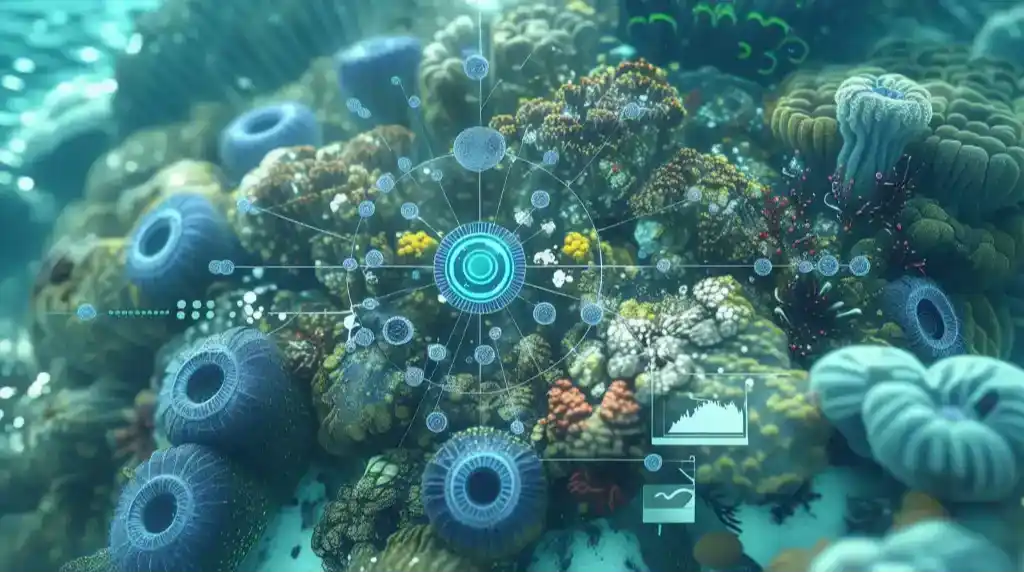
AI for underwater ecosystem monitoring addresses these limitations by introducing sophisticated analytical capabilities to enhance traditional methods. By leveraging machine learning algorithms and computer vision, researchers can analyze vast amounts of visual data collected from underwater cameras and sensors in real-time. This capability allows for the identification of species, behaviors, and other ecological patterns that may go unnoticed through manual observation. In addition, AI facilitates the integration of acoustic data, enabling the detection of marine life activity and environmental changes, which supplement visual assessments.
One of the key advancements in smart ocean monitoring is sensor data fusion, where information from multiple sources, such as cameras, sonars, and environmental sensors, is combined to create a richer understanding of the underwater landscape. This comprehensive approach enhances the precision and reliability of monitoring efforts, providing a clearer picture of ecosystem conditions and trends. Moreover, the implementation of predictive analytics, another aspect of AI and machine learning in marine conservation, allows scientists to forecast potential changes in marine ecosystems, paving the way for proactive management strategies.
Through these innovations, AI effectively transforms the traditional practices of underwater monitoring, making them more efficient and impactful. As technology continues to evolve, its integration into marine conservation efforts will be crucial for achieving sustainable outcomes in the face of rising environmental challenges.
Applications of AI in Ocean Ecosystems
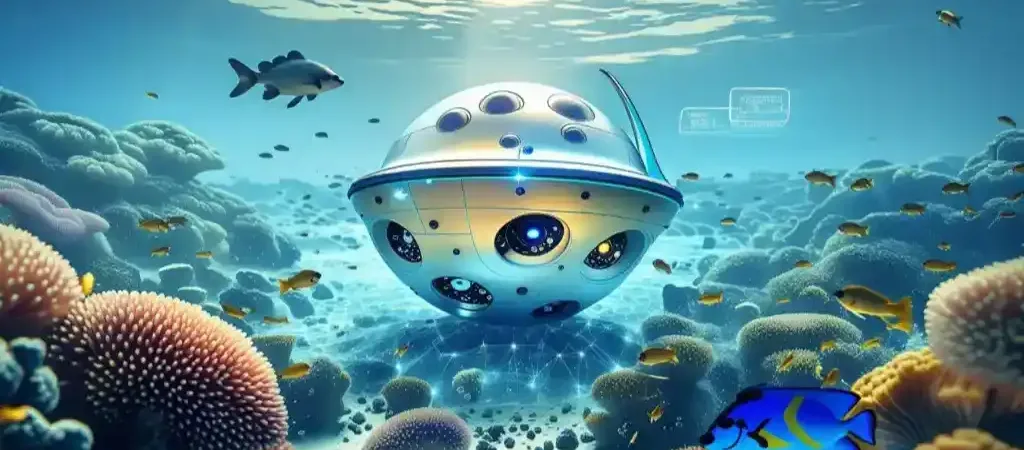
The integration of artificial intelligence (AI) in underwater ecosystem monitoring has revolutionized various aspects of marine conservation. Numerous applications of AI for underwater ecosystem monitoring employ smart ocean monitoring techniques that enhance our understanding of diverse marine environments. One prominent area is coral reef monitoring, where AI algorithms analyze images captured by underwater drones or cameras. These technologies can assess coral health, detect bleaching events, and monitor biodiversity, allowing researchers to respond proactively to environmental changes. For example, machine learning models can classify coral species and track changes in composition, enabling targeted conservation initiatives.
Another significant application is marine species tracking. AI systems facilitate the collection and analysis of vast amounts of data related to species movements through acoustic sensors and satellite tracking. By utilizing AI and machine learning in marine conservation, scientists can uncover migration patterns, breeding behaviors, and habitat use, thereby informing and guiding policy decisions for species protection. An exemplary case is the use of AI algorithms in analyzing sonar data to monitor fish populations and their responses to ecological pressures.
Furthermore, AI has proven invaluable in pollution detection in ocean ecosystems. With the deployment of AI-enhanced sensors and drones, the identification and monitoring of pollutants are more efficient and precise. For instance, machine learning models can process satellite imagery to detect algal blooms or oil spills, providing timely insights for mitigation efforts. These models are now an integral part of AI for Underwater Ecosystem Monitoring, enabling proactive responses to threats in real-time. Additionally, AI applications extend to the detection of illegal fishing activities through analysis of vessel movements and behavior patterns, supporting enforcement agencies in the proactive surveillance of marine protected areas.
In conclusion, the various applications of AI in underwater ecosystem monitoring provide critical tools for enhancing our understanding of ocean dynamics. By embracing these intelligent solutions, we can significantly strengthen our strategies for marine conservation and promote the sustainability of vital underwater habitats.
Challenges and Future Outlook for AI in Underwater Monitoring
The application of AI for underwater ecosystem monitoring faces several significant challenges that must be addressed to fully leverage its potential in marine conservation. One primary concern is data scarcity, as collecting comprehensive and high-quality data from underwater environments is often difficult and resource-intensive. Traditional methods of data collection, such as manual surveys or positioning elaborate sensor networks, may not yield sufficient information on marine biodiversity. As a result, AI and machine learning in marine conservation depend heavily on the availability of well-annotated datasets to train algorithms effectively.
Moreover, the harsh operating conditions encountered in underwater settings can pose limitations. High pressure, varying temperatures, and the corrosive nature of saltwater can restrict the deployment and functionality of certain AI technologies. The devices used to gather data often require robust construction and may face challenges related to energy consumption, given the difficulty of recharging or replacing batteries underwater.
Connectivity issues further complicate the situation, as underwater environments present unique communication challenges. Traditional wireless communication methods are often ineffective in deep water, creating obstacles for real-time data transmission. This limitation can hinder the timely analysis of data crucial for smart ocean monitoring initiatives.
Despite these challenges, the future outlook for AI in underwater monitoring appears promising. Continued advancements in AI technologies, such as improved image recognition algorithms and sophisticated data processing techniques, hold potential for generating valuable insights from previously inaccessible data. Collaborations between researchers specializing in AI techniques and marine biologists may lead to innovative solutions, supported by global education programs such as the UNESCO – Ocean Literacy Portal that overcome existing limitations. Coupled with advancements in sensor technology and underwater communication, these partnerships could significantly enhance the effectiveness of AI and machine learning in marine conservation, providing significant benefits for ecosystem health and management.
The integration of AI for underwater ecosystem monitoring is not just a trend but a strategic imperative for ocean sustainability. As our oceans face mounting threats, the ability to monitor them intelligently has never been more crucial.