

AI Tools for Entrepreneurs: The 2025 Founder’s Playbook to Build, Market, and Scale
Table of Contents
(Educational content — not legal, medical, or financial advice.)
Entrepreneurship in 2025 runs on leverage. What used to take a team and a budget now fits into a lean stack of assistants that never sleep. When founders ask where to begin, the most honest answer is simple: start with AI tools for entrepreneurs that remove your biggest bottlenecks, then stack wins methodically. This guide gives you practical blueprints, vetted product picks, and repeatable workflows to ship faster, sell smarter, and scale with confidence.
Why AI now? Because markets move faster than human attention. Data is noisy, buyers are distracted, and shipping speed has become a moat. AI tools for entrepreneurs compress research, ideation, production, and analysis from days to hours—without sacrificing quality when you keep judgment in the loop. The result is a company that iterates more, learns more, and compounds advantage.
What You’ll Get From This Guide
- A decision framework to choose the right AI tools for entrepreneurs for your stage and model.
- Step-by-step workflows that turn scattered ideas into publish-ready assets.
- A modular stack for content, product, sales, support, finance, and ops.
- Guardrails for ethics, risk, accuracy, security, and compliance.
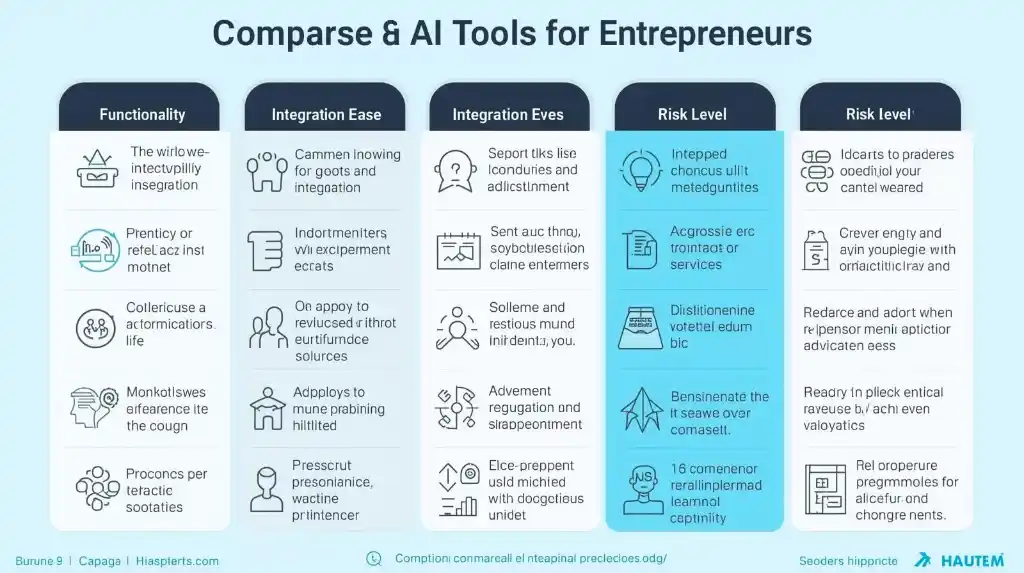
The 80/20 of Selecting AI (FITS + RISK)
Founders drown in options. Use this fast filter to pick the right tools that work today:
- F — Function: What job must be done (ideate, write, design, analyze, automate)?
- I — Integration: Will it fit your systems (docs, data, CRM, cloud, APIs)?
- T — Time-to-value: Can you see ROI in 14–30 days?
- S — Skill fit: Does it match your team’s strengths?
Then assess RISK: reliability, information security, switching costs, key-person dependence. The right AI tools for entrepreneurs earn their seat by eliminating expensive manual steps and revealing insights you can act on this week.
Core Writing & Ideation Stack
- ChatGPT (generalist copilot). For briefs, outlines, drafts, QA, and customer-facing copy, it’s the versatile core of AI tools for entrepreneurs. Pair it with a tight prompt library and an editing checklist to protect voice and accuracy. Official docs: OpenAI’s ChatGPT.
- Jasper (long-form & brand voice). If your team ships high volume with consistent tone, Jasper helps standardize templates and campaigns. Site: Jasper.
- Notion AI (notes to docs). Brainstorm in meetings, then expand into specs and SOPs right where your team works. Site: Notion AI.
Research & SEO Intelligence
- Perplexity (answer-engine research) and 5) Google Search Console for real query data. Aim your roadmap with what buyers actually search and say. Used well, these AI tools for entrepreneurs turn guesswork into evidence. Links: Perplexity, Search Console.
Design, Video, and Audio
- Canva Magic Write & Magic Design: speed from idea to visual. Site: Canva.
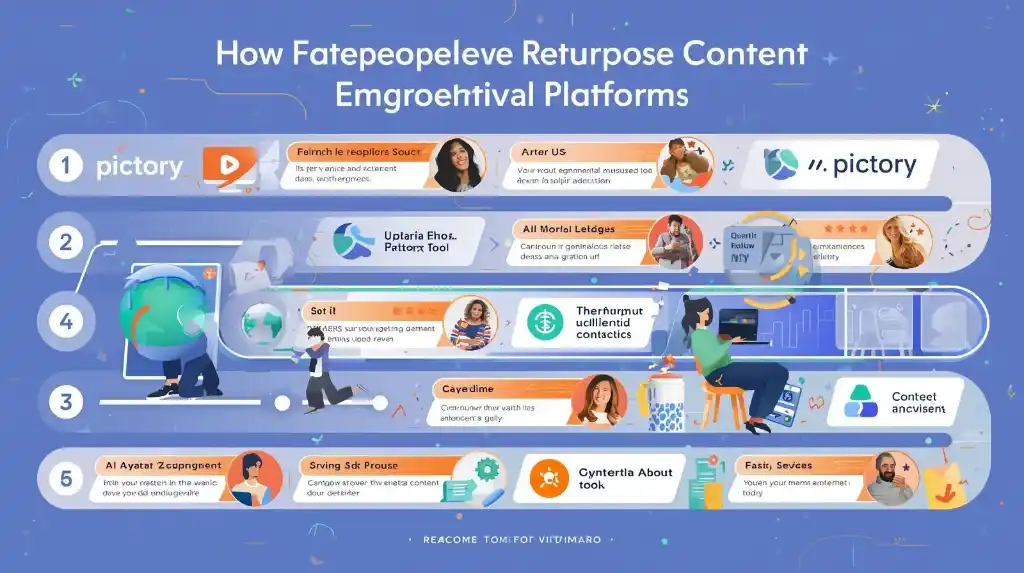
- Pictory: turn scripts and articles into social-ready videos—perfect for faceless channels. Site: Pictory.
- Synthesia: on-brand talking-head videos using AI avatars. Site: Synthesia.
- Murf: studio-quality voiceovers from text. Site: Murf.
Together, these AI tools for entrepreneurs let a one-person media team ship like a studio.
Automation & Data Glue
- Zapier/Make: connect apps, trigger workflows, and keep CRMs clean. Site: Zapier.
- Airtable Automations: light database + automation for content calendars, inventory, or sales ops. Site: Airtable.
- GitHub Copilot: developer acceleration for product teams. Site: GitHub Copilot.
Quality & Compliance
- Grammarly: clarity, tone, and correctness at scale. Site: Grammarly.
- Originality.ai: plagiarism/AI-use detection for editorial policies. Site: Originality.ai.
- Cloudflare: performance and security basics your buyers expect. Site: Cloudflare.
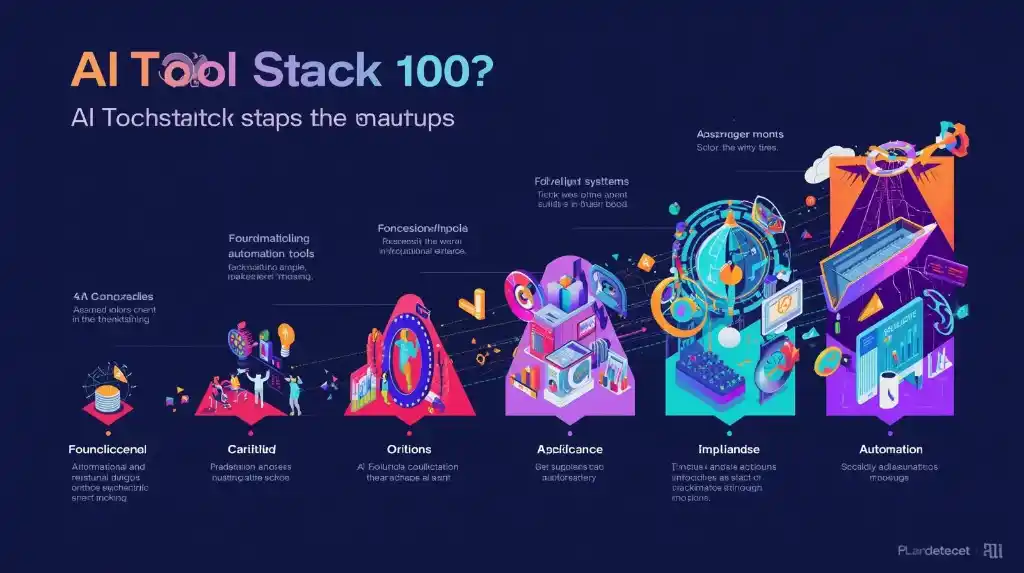
How to Build a Lean Stack (Three Tiers)
Tier 1 — Ship: the minimum set of AI tools for entrepreneurs to publish, sell, and support.
- ChatGPT for briefs, drafts, and customer replies.
- Canva for visuals; Pictory for video; Murf for voice.
- Zapier for intake → task creation → CRM → invoicing.
Tier 2 — Scale: standardize, measure, and improve.
- Jasper for codified brand voice.
- Airtable to track campaigns, assets, offers, and status.
- Search Console + analytics dashboards for feedback loops.
Tier 3 — Moat: proprietary data and custom automations.
- Fine-tuned prompts and private knowledge bases.
- Simple internal tools (Retool/Glide) to expose data to teams.
- Event pipelines that power personalized experiences.
Workflow Blueprints (Copy/Paste)
A) 90-Minute Content Sprint
Goal: publish one 1,200–1,600-word article with visuals.
- Intent snapshot (5 min): persona, pains, desired action.
- Outline (10): ChatGPT outline; adjust for authority and examples.
- Draft (35): section-by-section; add metrics and screenshots.
- Visuals (20): Canva diagrams; Pictory short teaser.
- SEO pass (10): headings, links, meta, alt text, schema. Helpful guide: Google Search Central.
- QA (10): Grammarly; fact checks; approvals.
Why it works: this uses AI tools for entrepreneurs to compress the slowest parts while keeping originality in your hands.
B) Social Repurposing Ladder
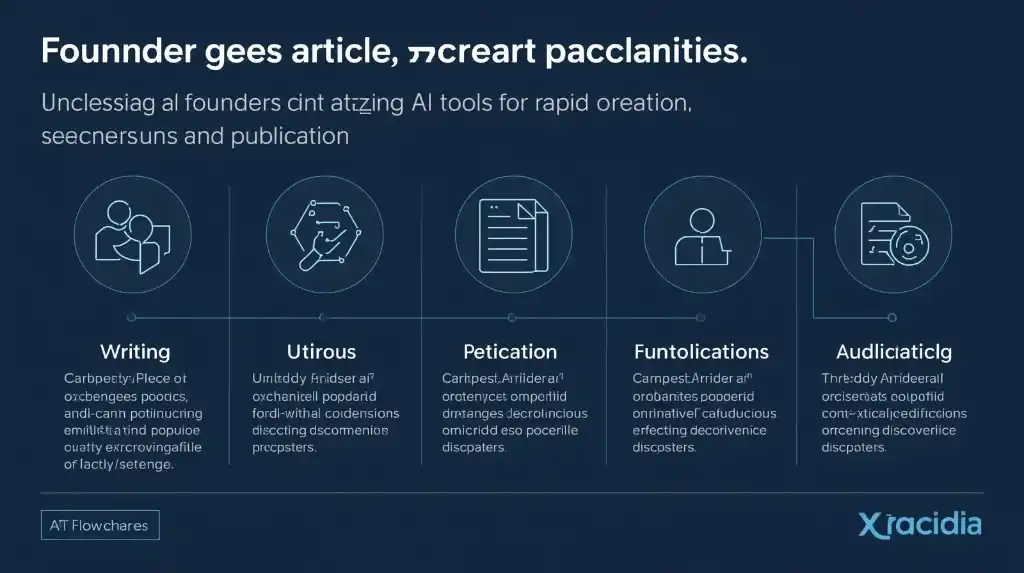
- Long post → 7-tweet/X thread → LinkedIn carousel → 60-sec Reel/Short.
- Use Murf for voice and Pictory for cuts; add Synthesia for A/B avatar intros.
Repeat weekly; it’s a compounding loop powered by AI tools for entrepreneurs.
C) Support Macro Factory
- Export top 50 tickets by tag.
- Have ChatGPT draft macros with empathetic openings and precise steps.
- Review with support lead; publish; track deflection.
Outcome: faster replies and happier customers, courtesy of AI tools for entrepreneurs coupled with human oversight.
Marketing Playbooks
Email Growth
- Lead magnets: checklists, calculators, or mini-courses built with AI tools for entrepreneurs to reach publishable quality in hours.
- Welcome series: draft 5-email nurture with story, value, and clear CTAs.
- Launch sequence: problem → solution → proof → offer, scripted first by AI, finalized by you.
SEO & Thought Leadership
- Establish content pillars; schedule biweekly deep dives.
- Commission data pieces by synthesizing surveys and internal analytics with AI tools for entrepreneurs, then add your commentary and charts.
- Refresh winners every 3–6 months (update facts, add examples, improve UX). See E-E-A-T guidance for people-first signals.
Paid Media
- Use AI to generate 20 ad variations; test hooks, angles, and visuals.
- Build landing pages with consistent voice; ship in hours, not weeks.
- Let scripts from AI tools for entrepreneurs seed video ads; validate fast, scale what converts.
Product & Engineering
- PRDs & acceptance criteria: draft with ChatGPT, refine with the team.
- Code acceleration: GitHub Copilot for boilerplate and tests.
- Release notes: concise, benefit-led copy generated in minutes.
The pattern: AI tools for entrepreneurs clear the runway so your builders build.
Sales & Success
- Account research: summarize sites, socials, and 10-K highlights in seconds.
- Discovery call prep: question lists tailored to industry and persona.
- Proposal drafts: structure + case studies + timelines; finalize details manually.
- QBR decks: data pulls + narrative frames from AI tools for entrepreneurs, then personalize.
Finance & Ops
- Forecasts and scenarios: spreadsheet models explained and stress-tested with AI.
- SOPs: record a Loom, transcribe, then have AI draft the step-by-step. Review, publish, iterate.
- Vendor due diligence: policy drafts and checklists created by AI tools for entrepreneurs and validated by counsel. See FTC Endorsement Guides for disclosure best practices.
Risk, Ethics, and Accuracy (Non-Negotiables)
- Human-in-the-loop. Keep the last mile with experts.
- Sources and citations. Link to standards, docs, and primary data.
- Privacy and IP. Don’t paste secrets into public models; prefer enterprise controls.
- Bias and tone. Review outputs for fairness and clarity.
- Accessibility. Add alt text and transcripts; follow WCAG basics.
- Transparency. Where appropriate, disclose AI assistance—trust compounds.
Ten Powerful Prompts (Steal These)
- “Act as a product marketing manager. Summarize the top three pains for [persona] evaluating [category], with quotes I can use.”
- “Turn these call notes into a crisp PRD: goals, user stories, edge cases, risks.”
- “Outline an email launch sequence (5 emails) for [offer]; include subject lines and value hooks.”
- “Draft a support macro that apologizes, explains, then gives exact steps for [issue].”
- “Create a comparison table for [tool A] vs [tool B] by features, limits, pricing, and ideal fit.”
- “Rewrite this paragraph in our voice: concise, specific, zero clichés.”
- “Propose three short video concepts for LinkedIn using this post as source; include hook and CTA.”
- “From this dataset, list 5 anomalies and hypotheses to investigate.”
- “Draft a 1-page partner proposal with benefits, timeline, and next steps.”
- “Generate an SOP for ‘weekly analytics review’ with roles and a 20-minute checklist.”
Deep Dives on Flagship Tools
ChatGPT (generalist writing, planning, and QA)
Use cases: content briefs, outlines, posts, UX copy, emails, interviews, product FAQs, meeting summaries, support macros, leadership comms. The strongest teams treat it as the center of AI tools for entrepreneurs, not a replacement for editors. Best practice: define tone sliders (e.g., authoritative 7/10, friendly 6/10), keep examples of great brand copy, and build a private prompt library.
Link: OpenAI ChatGPT.
Jasper (brand-safe scaling)
If you run multiple sites, newsletters, or campaigns, Jasper’s brand folders and templates help keep voice consistent across teams. It’s an operational layer in AI tools for entrepreneurs where governance matters.
Link: Jasper.
Pictory (script-to-video at scale)
Paste your article or script and generate platform-sized cuts with captions and b-roll. For founders doing faceless marketing, Pictory is a leverage play inside AI tools for entrepreneurs.
Link: Pictory.
Murf (natural voiceovers)
Choose the voice, pace, and emphasis; export clean audio ready for video or podcasts. It’s the fastest way to sound polished without a studio—one reason Murf sits high in many stacks of AI tools for entrepreneurs.
Link: Murf.
Synthesia (on-brand avatar videos)
Produce training, product explainers, or onboarding without cameras. For distributed teams, it’s a dependable pillar among AI tools for entrepreneurs because updates ship in minutes, not weeks.
Link: Synthesia.
Canva Magic Write (words that match visuals)
Brainstorm captions, headlines, and post copy where your designs live. For social teams, it’s the connective tissue in AI tools for entrepreneurs between visuals and messaging.
Link: Canva.
Grammarly (quality control)
Set style guides, detect tone shifts, and scale clarity. Editors keep the last word, but Grammarly is the safety net most AI tools for entrepreneurs rely on in production.
Link: Grammarly.
Airtable + Zapier (ops backbone)
Content calendars, asset libraries, partner lists, and automations that move data without manual work. For scrappy teams, this duo is the quiet engine room of AI tools for entrepreneurs.
Links: Airtable, Zapier.
Analytics & Insight Loops
Dashboards matter when they drive action. Pipe Search Console, ad platforms, CRM, and product events into a single view. Use AI to summarize anomalies weekly, then assign owners. This is how AI tools for entrepreneurs translate noise into next steps.
Security & Governance Basics
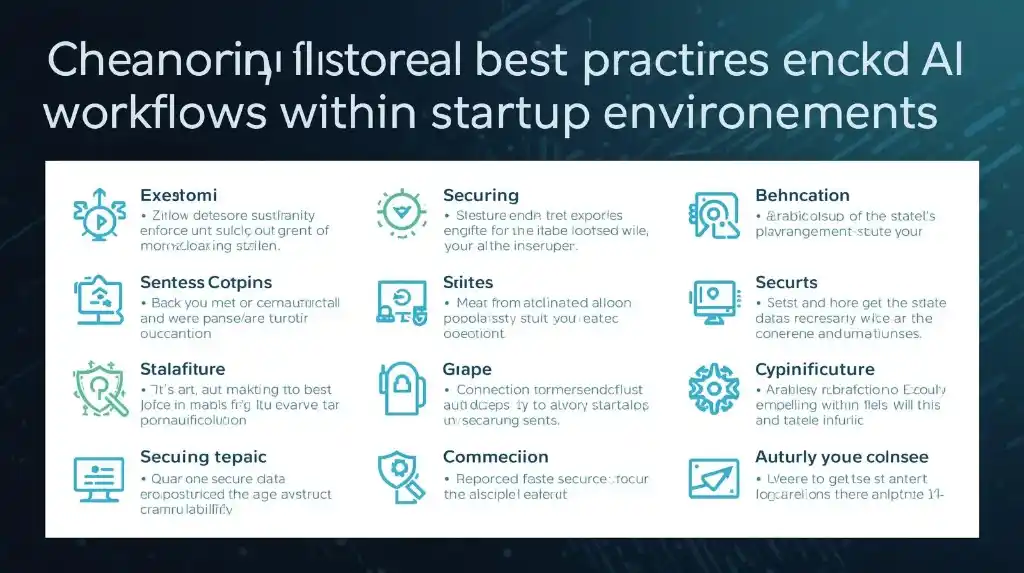
- Accounts: SSO, 2FA, least-privilege access.
- Data flows: inventory where content and customer data move.
- Retention: set deletion policies for drafts, files, and exports.
- Contracts: DPAs with vendors; review regional rules.
- Training: short playbooks on safe prompting and disclosure.
30-60-90 Day Rollout Plan
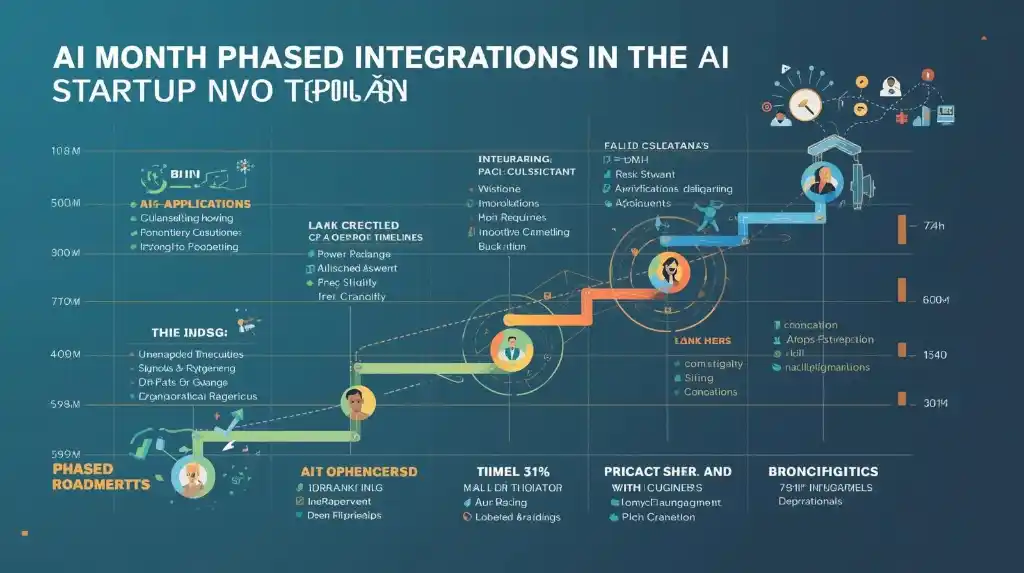
Days 1–30: Install
- Pick three AI tools for entrepreneurs (one for writing, one for video/voice, one for automation).
- Ship one content sprint per week and one support-macro batch.
- Document wins and gotchas; tune prompts.
Days 31–60: Standardize
- Create brand voice docs; templatize briefs, outlines, and macros.
- Add dashboards; start monthly SEO and lifecycle reviews.
- Expand automations across intake, CRM, and billing.
Days 61–90: Scale
- Launch a productized content offer or partner program.
- Build a micro-SOP library; delegate routine steps.
- Pilot one proprietary data project that unlocks a new moat.
KPIs to Watch
- Cycle time (idea → shipped)
- Cost per asset (blended)
- Organic lift (impressions, clicks, assisted conversions)
- Reply/deflection time in support
- Sales velocity and win rate
- Content quality score (editorial rubric)
When these trend the right way, your AI tools for entrepreneurs are paying for themselves.
Ethical Use & Brand Trust
Founders who win play the long game. Attribute sources, avoid deceptive simulations, and make content useful. AI tools for entrepreneurs are multipliers; your reputation is the base they multiply.
FAQ (Short)
Is AI a threat to originality?
Not if you bring experience. Combine your stories, data, screenshots, and tests with speed from AI tools for entrepreneurs. Originality lives in judgment and proof.
How do I prevent errors?
Require sources, add editor review, and keep a “facts to verify” checklist in your workflow. The best AI tools for entrepreneurs still need human sign-off.
What about data privacy?
Use enterprise controls, minimize sensitive pastes, and train teams on what never leaves your systems. Treat AI tools for entrepreneurs like any other vendor: due diligence first.
Which three tools should I start with?
A writer (ChatGPT), a visual/video tool (Canva + Pictory or Synthesia), and an automation layer (Zapier). That trio covers 70% of leverage most AI tools for entrepreneurs unlock.
Closing Note
The competitive edge isn’t the tool—it’s the system you build around it. Ship weekly, review honestly, and iterate. Used with craft and care, AI tools for entrepreneurs will buy back your scarcest resource: time you can reinvest in customers, product, and growth.
Industry Playbooks (eCommerce, SaaS, Services, Education)
eCommerce
- Product pages: Draft benefit-led copy, FAQs, and comparison tables in minutes; test variants quickly.
- UGC-style ads: Script, voice, and cut short videos without filming; iterate hooks at scale.
- Support: Generate macros for returns, sizing, and shipping; reduce response time and refunds.
SaaS
- ICP research: Summarize pain points by segment; write landing pages for each persona.
- Onboarding: In-app tooltips and emails authored from a single brief; keep tone consistent.
- Sales enablement: Produce one-pagers and battlecards from discovery notes.
Agencies & Consultants
- Productized offers: Standard scopes and timelines; proposals that close faster.
- Content engines: Editorial calendars, briefs, and drafts, with trackable QA.
- Reporting: Automated monthly decks with commentary clients actually read.
Course Creators & Education
- Curriculum design: Map outcomes → modules → lessons; draft worksheets and quizzes.
- Video production: Script and generate lectures with captions, transcripts, and slides.
- Community: Summarize discussion threads; turn answers into evergreen resources.
Prompt Patterns That Work
Role + Task + Constraints
“Act as a senior growth marketer. Write 3 headline options for a landing page targeting CFOs at mid-market manufacturers. Use plain language, ≤12 words, avoid buzzwords.”
Few-Shot Examples
Paste two samples of your brand’s best copy, then ask for three more in the same style. Reinforce with feedback: “Shorter. Swap metaphors for concrete nouns.”
Guardrails & Checklists
Attach checklists (“every paragraph must include a fact, example, or number”) to nudge outputs toward substance. Save the best “recipes” to reuse.
Editorial Quality Rubric (Quick)
- Reader goal clear in intro
- Claims linked to source or example
- Paragraphs short; headings descriptive
- Specifics beat generalities; numbers beat adjectives
- Visuals support the point; alt text written
- Next step and CTA present
Internationalization & Localization
Translate with context, not just words. Provide locale, audience, examples to swap, and units to convert. Have native reviewers spot idioms, legal quirks, and cultural nuances.
Team Onboarding Plan
- Week 1: Tool access, prompt basics, and safety rules. Pair new hires with a “prompt buddy.”
- Week 2: Shadow a live sprint; ship a low-risk asset; get edits with reasons.
- Week 3: Own a full sprint with editor review; add two improvements to the playbook.
Top Mistakes (and Fixes)
- Over-automation: Keep humans on quality and brand calls.
- Vague prompts: Add role, audience, style, length, and examples.
- One-off wins: Turn successes into SOPs so they repeat.
- Ignoring analytics: Instrument your funnels; review weekly.
- Security blind spots: Centralize accounts; audit access quarterly.
Budget Scenarios
Shoestring Solo
- Writer: ChatGPT Free/Plus
- Visuals: Canva Pro
- Automation: Zapier Starter
- QA: Grammarly
Lean Team
- Add Jasper for brand voice, Pictory or Synthesia for video, Airtable for ops.
Growth Mode
- Layer on Copilot, Originality.ai, and Cloudflare plans; invest in analytics and data pipelines.
Legal & Compliance Snapshot (Not Advice)
- Privacy: Update notices if you process user content with vendors.
- Copyright: Respect licenses for fonts, images, and music; keep receipts.
- Disclosures: Label affiliates and testimonials; avoid deceptive AI simulations.
- Accessibility: Provide captions/transcripts; test with keyboard navigation.
ROI Math (Back-of-the-Envelope)
If a founder spends 10 hours to publish a premium post and a toolchain cuts that to 4, that’s 6 hours saved. If those 6 hours produce two extra proposals that close at 30% with a $1,500 average, the expected value is $900. Do that weekly and the stack pays for itself many times over.
Content Calendar Skeleton (12 Weeks)
Wk 1: Problem teardown → Wk 2: How-to guide → Wk 3: Case study → Wk 4: Opinion
Repeat the loop across 3 pillars. Each week: ship one blog, three socials, one email, and one short video. Add analytics review on Friday.
Customer Voice Engine
Scrape reviews (your site, app stores, G2), tag pains and payoffs, and feed themes into briefs. Your language tightens, objections shrink, and conversion climbs.
Fundraising & Investor Comms
Generate one-pagers and update emails fast; keep numbers tight and sources linked. Maintain a living FAQ for diligence questions and pull answers on demand.
Hiring & Talent
Write scorecards, interview questions, and take-home prompts. Summarize interviews; reduce bias by standardizing criteria and rubrics.
Security Playbook (Starter)
- Use SSO/2FA and role-based access
- Keep vendor data processing agreements on file
- Encrypt docs at rest; restrict sharing by default
- Run quarterly permission reviews
Real-World Mini Case Studies
Case 1 — Solo SaaS Founder to First $10k MRR
Maya built a tiny analytics tool for Shopify stores while holding a day job. She blocked 90 minutes before work for research and drafting, then 60 minutes at night for video and outreach. In month one, she shipped a landing page, three feature pages, and two comparison posts. In month two, she added a weekly how-to series and recorded short explainer clips using generated voiceovers. Zapier pushed every trial signup into a CRM with automatic onboarding emails. By month four, organic traffic and referrals…
Case 2 — Agency Owner Productizes a $3k Audit
Luis ran a small PPC agency with unpredictable months. He packaged a “90-minute ad account audit” with a clear checklist and a one-page report template. He built the report skeleton once, then used AI to pre-fill sections: spend trends, anomaly notes, benchmark comparisons, and draft recommendations. He recorded a short video summary for each client with slides and a synthetic voiceover, then hand-tuned the top five recommendations. Close rates jumped because prospects could “see” the value before commit…
Case 3 — Course Creator Launches Without a Studio
Aria teaches motion design. She drafted a 6-module curriculum with outcomes, lesson plans, and projects. She then scripted lessons, generated clean narration, added screen recordings, and produced short “chapter trailers” for social. A simple website held the syllabus, instructor story, and FAQs. Email collection began with a free mini-lesson and a worksheet; the welcome series delivered two samples and a behind-the-scenes story. On launch week, she ran three live Q&A sessions and turned each into evergr…
Case 4 — Brick-and-Mortar Service Business Goes Digital
Sam owns a boutique gym. He used the toolkit to create a content flywheel: weekly myth-busting posts, exercise primers with diagrams, and short reels narrated with friendly voices. He added a quiz (“Find your perfect plan”) and routed results into segmented email nurtures. Cancellations dropped because members felt guided between sessions, and online challenges added a new revenue stream. Behind the scenes, standard operating procedures kept trainers aligned on tone and advice, turning every staff member…
What These Stories Share
- A narrow promise: each business picked one job to become known for.
- A publishing heartbeat: modest but relentless cadence beats sprint-and-stall cycles.
- Proof over polish: screenshots, data, and lived examples build trust faster than generic claims.
- Systems thinking: once something worked, it became a template, then a standard.
If you’re starting, borrow a cadence from these stories. Pick one flagship asset per week, one short video, and one outreach channel. Treat it like training: small, repeatable sets win the month and the quarter.
Next Steps (One Week Plan)
Block two 90-minute sprints on your calendar, pick one customer problem to explain, and ship a helpful post with three visuals and a 45-second clip. Send it to ten prospects. Save what worked into a template you’ll reuse next week.