
Table of Contents
Introduction
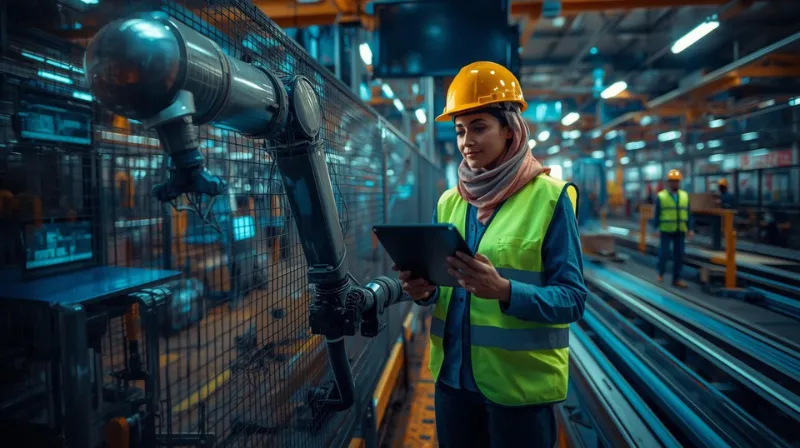
Over the next five years, a quiet but profound shift is taking place across America’s working-class landscape. From warehouses in Ohio to construction sites in Texas, the tools of the trade are no longer just drills, forklifts, or hammers—they’re also algorithms, sensors, and intelligent machines. As artificial intelligence (AI) rapidly evolves, it’s not just reshaping tech-heavy industries—it’s AI transforming blue‑collar jobs in ways most people didn’t anticipate.
While much of the public discourse around AI centers on white-collar professions like finance, healthcare, or software development, its impact on manual labor sectors is growing just as fast. Automation, computer vision, machine learning, and robotics are now integral parts of factories, farms, and freight operations. These technologies are redefining how work is done, who does it, and what skills are required to thrive.
But this transformation isn’t black and white. For millions of American workers, AI brings both opportunity and uncertainty. It promises safer workplaces, higher efficiency, and new roles—but also raises questions about job security, training gaps, and economic displacement. Understanding how AI transforming blue‑collar jobs is no longer optional—it’s essential for workers, employers, and policymakers alike.
In this article, we’ll explore how AI is changing the face of blue-collar work in the United States between 2025 and 2030. We’ll look at the industries being impacted, the technologies driving the shift, the challenges ahead, and what it all means for the future of American labor.
What Makes Blue-Collar Jobs Ripe for AI Transformation?
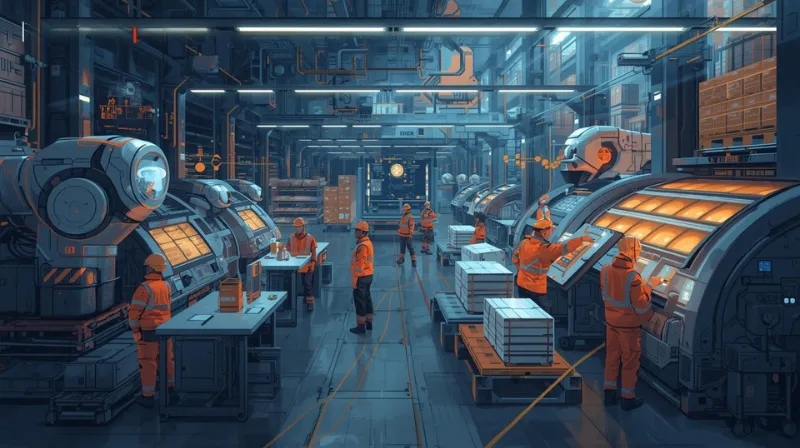
Blue-collar industries have long relied on physical strength, repetitive tasks, and on-the-ground decision-making. But today, that’s precisely what makes them fertile ground for automation and AI innovation. From predictive maintenance on factory machines to autonomous forklifts in warehouses, the presence of AI in these environments is accelerating fast. In fact, studies by McKinsey show that nearly 45% of activities in manual labor sectors could be automated using current technologies (source).
The core reason why AI transforming blue‑collar jobs so effectively lies in its ability to handle tasks that are dangerous, repetitive, or data-intensive—three characteristics common in sectors like construction, logistics, and manufacturing. Take for example smart vision systems used for quality control in assembly lines: these systems not only reduce error rates but also free up human workers for more judgment-based roles.
At this pace, workers who understand how to collaborate with smart machines and digital tools will be the most resilient. That’s why upskilling is becoming more critical than ever. For a closer look at how technology is reshaping remote work opportunities in the U.S., check out our related post:
👉 Best Remote Jobs For Digital Nomads In USA
Real-World Examples of AI transforming blue‑collar jobs
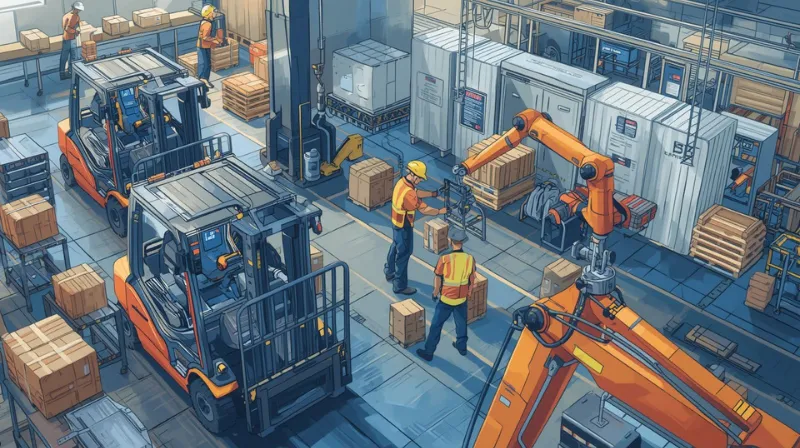
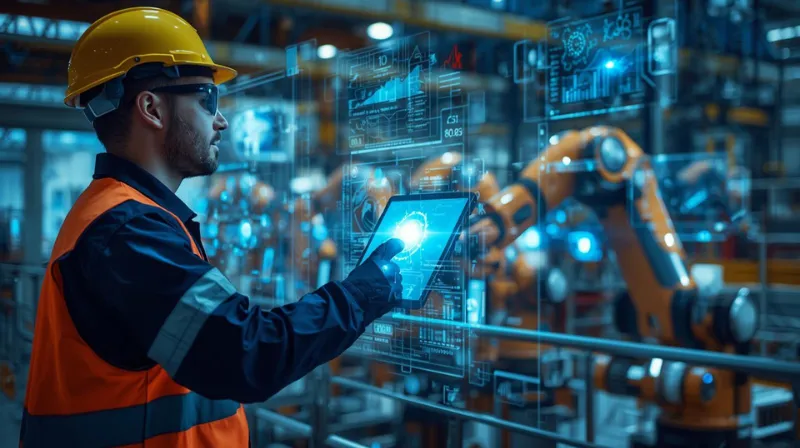
While discussions around artificial intelligence often feel futuristic, its impact on blue-collar work is already happening today—on job sites, in warehouses, and on production floors across America. From large-scale factories to small logistics hubs, companies are deploying AI to transform blue-collar jobs at every level.
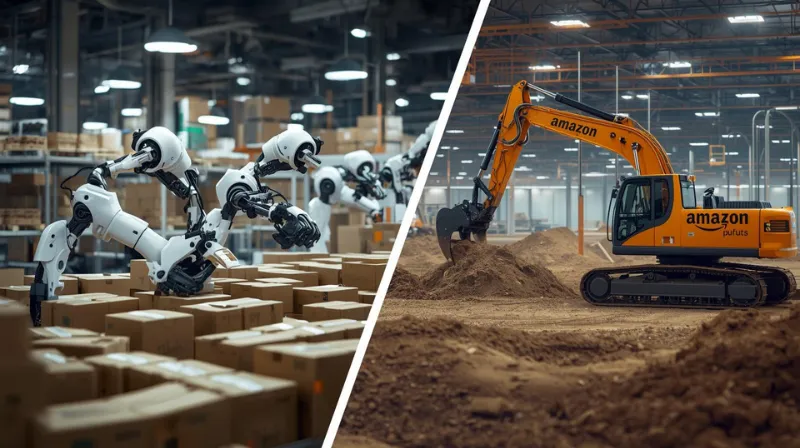
One striking example is Amazon’s use of AI-powered robotics in its fulfillment centers. These smart machines handle everything from sorting to transporting goods, allowing human workers to focus on quality checks and maintenance tasks. This blend of human oversight and machine efficiency reduces fatigue and speeds up delivery—a perfect case of AI transforming blue‑collar jobs without completely replacing human labor.
In the construction industry, companies like Built Robotics have introduced autonomous excavation equipment that can dig trenches or level land with minimal human input. These machines use AI to read site plans, adjust to terrain, and operate with millimeter precision. Instead of eliminating jobs, they shift workers into supervisory roles that require decision-making and safety monitoring.
Similarly, in manufacturing, General Motors has integrated computer vision and machine learning into its quality assurance process. AI systems detect micro-defects in parts faster than the human eye, improving safety and reducing waste. Workers now operate alongside these systems, adjusting parameters or interpreting results—proof that AI isn’t about replacement, but collaboration.
These examples show that AI transforming blue‑collar jobs is not about removing people from the process—it’s about making the work smarter, safer, and more scalable.
The Economic and Social Impact of AI on Blue-Collar Work
As AI continues transforming blue-collar jobs, its impact goes beyond just the workplace—it reverberates across the economy and society. On one hand, automation and smart technologies increase output, reduce injuries, and lower costs for businesses. On the other hand, they introduce anxiety over job security and wage stagnation for millions of workers.
Economically, sectors adopting AI are seeing measurable gains in productivity. According to the Brookings Institution, industries with higher rates of AI and automation adoption tend to experience increased economic output and competitiveness (source). For large corporations, this often means better margins and global market advantages.
But for workers, the story is more nuanced. Some roles are phased out entirely—especially repetitive, low-skill tasks—while others evolve into tech-assisted positions requiring new skills. The risk is greatest in regions that rely heavily on blue-collar jobs with low levels of educational attainment. Without proactive retraining programs, these communities could face widening income gaps and long-term displacement.
Socially, this shift affects more than just income. It alters identity, community dynamics, and even intergenerational career paths. Blue-collar work has historically been a path to the middle class—AI could either reinforce that opportunity with new tools, or weaken it through inequality.
For workers and families looking to safeguard their financial futures, diversification and financial literacy become essential. If you’re considering how to build stability during this technological transition, we recommend reading:
👉 Saving And Investing 7 Ways Grow Wealth
In short, AI transforming blue‑collar jobs isn’t just about machines—it’s about how society adapts to change, protects its labor force, and balances progress with inclusion.

The Skills That Will Matter Most in the AI-Driven Blue-Collar Economy
As AI continues transforming blue-collar jobs, the very definition of what it means to be “skilled” is shifting. Traditional competencies like mechanical ability or physical stamina remain valuable—but they are no longer enough. In this new landscape, adaptability, digital literacy, and the ability to collaborate with machines are becoming critical.
One key area is technical upskilling. Workers who can operate, monitor, or troubleshoot AI-powered equipment will be in higher demand than those who can only perform manual tasks. For example, a warehouse worker trained to manage a fleet of autonomous robots or interpret machine-generated diagnostics can deliver far more value than someone relying on muscle memory alone.
Another essential skill is data interpretation. As sensors and smart tools become commonplace, the ability to read dashboards, understand trends, and act on insights is now part of the blue-collar toolkit. Whether it’s detecting anomalies in machine behavior or using apps for predictive maintenance, these are no longer “white-collar only” tasks.
Communication and decision-making are also vital. As AI transforming blue‑collar jobs, workers must be able to escalate issues, make judgment calls, and collaborate across departments. These “soft” skills—long overlooked in manual industries—are fast becoming core assets.
Finally, lifelong learning will be a cornerstone of resilience. In an economy where AI transforming blue‑collar jobs at a rapid pace, standing still is not an option. Workers who embrace continuous education—whether through online platforms, vocational training, or employer-sponsored programs—will not only keep their jobs, but thrive in them.
Ultimately, AI transforming blue‑collar jobs is not a threat to skill—it’s a challenge to evolve skill. Those who rise to that challenge will shape the future of labor, not be left behind by it.
Government and Corporate Roles in Supporting the Transition
As AI transforming blue‑collar jobs becomes a defining force in the labor market, the responsibility to manage its impact cannot rest on workers alone. Both government institutions and private corporations must step up to ensure the shift is not only efficient, but also equitable.
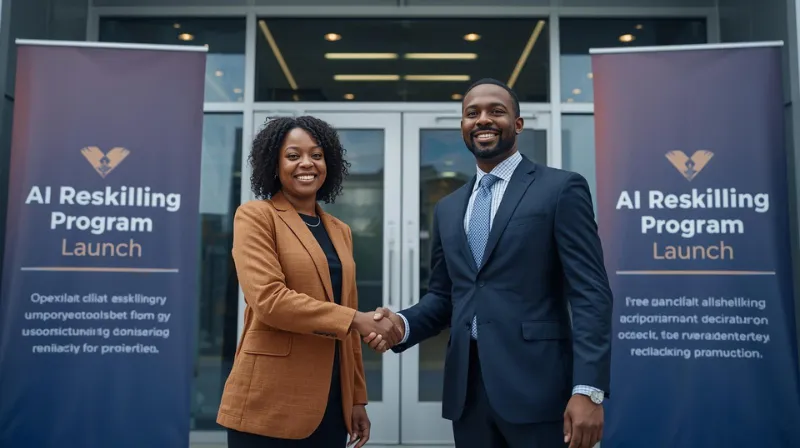
On the governmental side, investment in reskilling programs is essential. Federal and state agencies can partner with vocational schools, unions, and private companies to offer accessible, affordable training for displaced or at-risk workers. Tax incentives for companies that commit to human-AI collaboration—not just automation—can also steer industries toward more inclusive adoption strategies.
Public policy can also address regional disparities. As AI transforming blue‑collar jobs more quickly in industrial hubs than in rural areas, targeted funding for technology education in underdeveloped zones can reduce inequality before it deepens.
Meanwhile, corporations must acknowledge that automation doesn’t have to mean elimination. Ethical integration of AI involves transparency, employee training, and support systems for job transition. For example, companies like Siemens and Caterpillar are investing in “blended workforce” models, where humans and machines complement each other rather than compete.
Additionally, internal upskilling pipelines can help retain experienced workers by equipping them with new capabilities. Instead of letting go of talent, firms can reassign seasoned employees to oversee or operate AI systems—turning potential disruption into internal innovation.
By working together, public and private sectors can ensure that AI transforming blue‑collar jobs is a pathway to prosperity—not a source of division or loss. The right strategy today could mean a stronger, smarter workforce tomorrow.
What the Future Holds: Blue-Collar Work in 2030
Looking ahead to 2030, the pace of AI adoption shows no signs of slowing down. The next five years will likely mark a pivotal phase in how AI transforming blue‑collar jobs reshapes the U.S. economy, workforce, and even community identities.
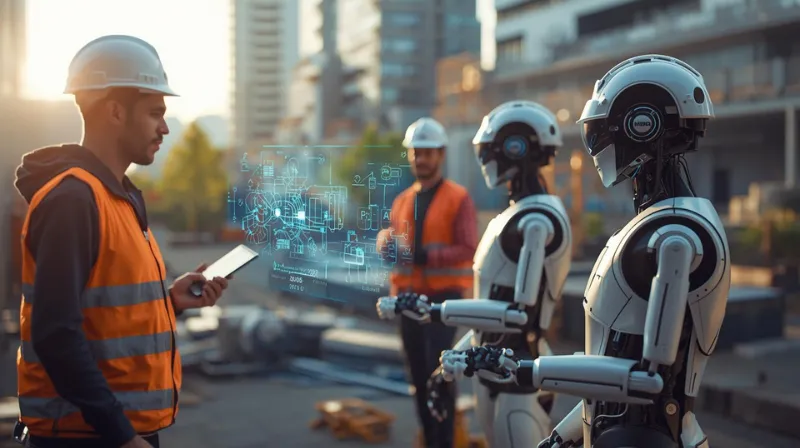
In a best-case scenario, AI integration leads to job enhancement rather than displacement. Blue-collar roles evolve into tech-assisted positions where humans and machines work in tandem. For example, a construction worker might use augmented reality (AR) glasses to visualize structural plans in real-time, while factory technicians operate through voice-controlled dashboards. In this version of the future, AI transforming blue‑collar jobs results in better pay, improved safety, and greater job satisfaction.
A more turbulent scenario, however, involves insufficient training and policy inaction. In this case, automation outpaces human adaptation, leading to large-scale job losses in vulnerable sectors such as basic assembly or long-haul trucking. Without proactive support, AI transforming blue‑collar jobs could contribute to regional economic decline and deeper workforce polarization.
Still, the most likely future lies somewhere in between. Hybrid roles will dominate—where physical labor is augmented, not replaced. Job seekers with a mix of hands-on experience and digital competency will be best positioned to thrive.
Ultimately, the future of blue-collar work isn’t about choosing between man or machine. It’s about how we design systems where both can succeed.
Frequently Asked Questions (FAQs)
1. Will AI completely replace blue-collar jobs?
Not entirely. While AI transforming blue‑collar jobs may lead to the automation of some repetitive or hazardous tasks, most roles will evolve rather than disappear. Human oversight, adaptability, and physical intuition remain irreplaceable in many environments.
2. What are the safest blue-collar jobs in the age of AI?
Jobs that require complex judgment, mobility, or human interaction—such as electricians, HVAC technicians, or on-site construction workers—are less likely to be fully automated. Still, even these roles will be influenced by AI transforming blue‑collar jobs, as tools and workflows become more digitized.
3. How can workers prepare for this transformation?
Upskilling is key. Workers should seek training in areas like robotics operation, digital diagnostics, and data interpretation. By embracing continuous learning, they can thrive instead of being displaced by AI transforming blue‑collar jobs.

Conclusion and Next Steps
The impact of AI transforming blue‑collar jobs is no longer a distant future—it’s a current reality that continues to expand in scope and speed. From autonomous machines on job sites to AI-powered systems in factories and logistics, the role of technology in manual labor is becoming foundational, not optional.
This transformation carries both promise and peril. While it can lead to increased safety, efficiency, and innovation, it also raises serious questions about job displacement, skill gaps, and economic inequality. Workers, employers, educators, and policymakers all share responsibility in navigating this transition wisely.
To remain competitive and resilient, blue-collar workers must adopt a mindset of adaptability. Investing time in learning digital tools, understanding how AI systems operate, and building hybrid skills will be essential. Similarly, companies that proactively retrain their workforce will benefit from smoother integration and reduced turnover.
In summary, AI transforming blue‑collar jobs is not a trend to resist—it’s a wave to ride. The key lies in making strategic, inclusive choices that put both people and progress at the center. If approached thoughtfully, this shift can elevate—not eliminate—the vital role of blue-collar labor in the American economy.