
Table of Contents
If you’ve been waiting for “the perfect time” to start, here’s your sign: Investing with 100 is enough to build momentum, learn core skills, and form habits that compound for decades. This guide walks you—step by step—through education, tools, account setup, low‑cost diversified options, and a realistic plan to keep going after your first $100.
Quick take: With just $100, open a commission‑free account, buy a broad‑market ETF (via whole or fractional shares), turn on auto‑invest for $25–$100 per month, and review quarterly. That’s it. Everything else is optimization.
1) Financial Education: Your First Step
Before you click “buy,” invest a little time in the basics. A short foundation will help you avoid the most common beginner mistakes and stay consistent when markets wobble.
- What you’ll learn first: how stocks and ETFs work, what “diversification” means, how compounding grows small contributions, the link between risk and return, and how to minimize fees and taxes.
- Starter resources (free & credible):
- U.S. SEC Investor.gov: beginner primers, fees, and scams to avoid.
- FINRA education: order types, risk, and broker checks.
- UK FCA guidance for retail investors.
- Investopedia glossary & tutorials.
- Community guides: Bogleheads® investing start page.
Mental model: You’re building a habit machine. Your first Investing with 100 is the pilot test that lets you practice deposits, diversify, and review.
2) Choosing a Commission‑Free Platform (and Why UX Matters)
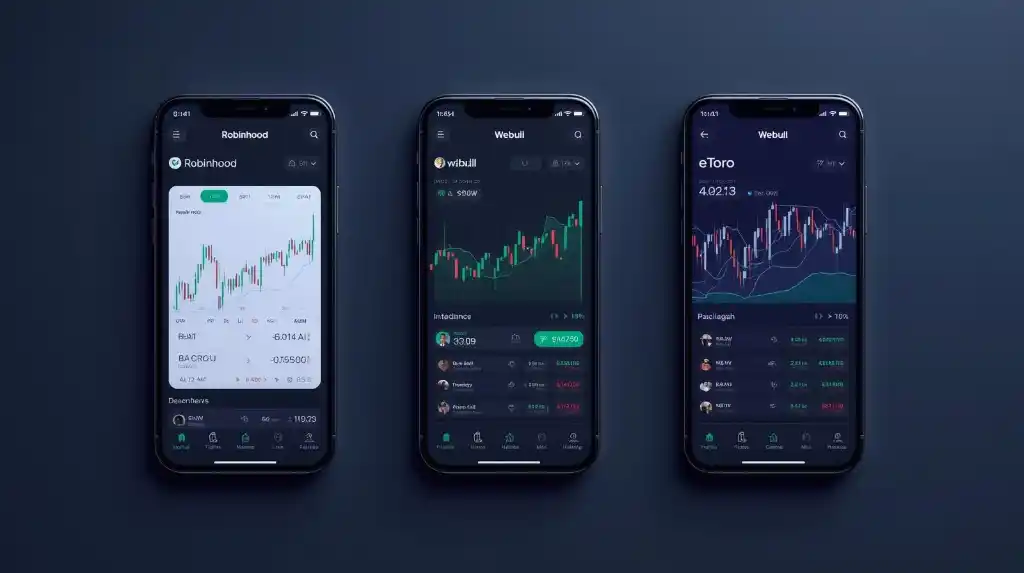
Commission‑free brokers and apps remove friction so more of your $100 buys assets instead of paying fees. When comparing platforms, focus on:
- Safety & regulation: Is the broker regulated (e.g., SEC/FINRA in the U.S., FCA in the UK)?
- Account types: Taxable brokerage vs. tax‑advantaged (e.g., U.S. IRA/Roth IRA; UK ISA/SIPP).
- Fractional shares: Critical for Investing with 100, allowing you to buy a small slice of high‑priced ETFs/stocks.
- Auto‑invest & recurring buys: Keeps you consistent.
- ETF availability & low expense ratios: Costs matter.
- Education & interface: Clear, simple UI reduces mistakes.
Tip: Confirm platform availability and local rules before opening. See Investor.gov broker check (external link) and FINRA BrokerCheck (external link). In the UK, see the FCA Register (external link).
3) Exploring ETFs and Index Funds (Your Diversification Shortcut)
For most beginners, broad‑market ETFs and index funds are the cleanest path to diversification. With Investing with 100, you can own hundreds (or thousands) of companies in one trade.
- Core idea: Track the market, keep costs low, hold long‑term.
- Why ETFs?
- Trade like stocks throughout the day
- Typically low expense ratios
- Instantly diversified
- Examples of broad exposures (for illustration, not endorsements):
- U.S. total market or S&P 500 ETFs from major issuers like Vanguard, iShares, State Street SPDR.
- Global developed‑market ETFs if you want non‑U.S. exposure.
Learn more about index funds and expense ratios on Vanguard (external link) and Morningstar fund pages.

4) The Power of Fractional Shares
High price per share? Not a problem. Fractional shares let you invest a set dollar amount—perfect for Investing with 100.
- Example: If an ETF is $450/share, your $100 buys 0.222… shares automatically.
- Why it matters: You can stick to your plan regardless of share prices, maintain diversification from day one, and scale smoothly as you automate contributions.
Most modern brokers in the U.S. and UK support fractional trading on major ETFs/stocks.
5) Micro‑Investing Apps (Training Wheels That Actually Work)
Round‑ups, $5 auto‑deposits, themed portfolios—micro‑investing apps lower the starting barrier and make Investing with 100 feel effortless. They’re especially helpful if you struggle to save or want a “set it and forget it” system. As your confidence grows, you can move into a traditional broker—or run both.
Key is consistency. Micro‑investing doesn’t replace a plan; it supports it.

6) A Concrete $100 Game Plan (Plus Your Next 90 Days)
Day 1:
- Open a regulated, commission‑free account that supports fractional shares and auto‑invest.
- Fund it with $100.
- Buy one broad‑market ETF (or split across two) aligned with your region/tax setup. That’s your “core.”
Day 2 (10 minutes):
- Turn on monthly auto‑invest for $25–$100.
- Re‑read a short SEC/FINRA or FCA primer.
Day 30:
- Review: Did contributions run? Any fees? Is your ETF still suitable?
- Add $25–$100.
Day 60–90:
- Keep the routine. Consider a second ETF (e.g., international or bonds) only if it improves diversification and you understand the role.
- Don’t chase “hot” sectors yet.
This is Investing with 100 the right way: simple, diversified, and repeatable.
7) Sample Micro‑Portfolios You Can Build with $100
Important: The examples below are educational—not recommendations. Always verify costs, taxes, and suitability.
- Ultra‑Simple Core (100%)
- 100% broad‑market equity ETF
- Rationale: one fund, maximum simplicity, minimal fees. Great for Investing with 100.
- Core + International (80/20)
- 80% domestic broad‑market equity ETF
- 20% international developed‑market ETF
- Rationale: modest global tilt for diversification.
- Core + Bonds (80/20)
- 80% broad‑market equity ETF
- 20% aggregate bond ETF
- Rationale: smooths volatility if you’re risk‑sensitive.
- Core + Factor Tilt (90/10)
- 90% broad‑market ETF
- 10% “factor” ETF (e.g., value or quality)
- Rationale: adds a small, evidence‑based tilt after you’ve mastered the basics.
Rebalance only when allocations drift materially (e.g., 5–10 percentage points), not every week. That’s still Investing with 100—just more organized.
8) Consistency Beats Timing (and Why Automation Wins)
Dollar‑cost averaging (DCA) neutralizes the urge to time the market. By auto‑investing a fixed amount regularly, you buy more shares when prices are low and fewer when they’re high—without overthinking.
- Action: Automate deposits on payday.
- Habit: Calendar a quarterly 15‑minute review.
- Mindset: Volatility is normal. Your edge is time in the market, not timing the market.
Make Investing with 100 your autopilot routine, then increase contributions as income allows.
9) Risk Management 101 (Simple Rules That Save You)
- Diversify first, optimize later. Start with broad ETFs before sector/theme bets.
- Keep costs low. Expense ratios and trading costs compound against you.
- Avoid concentration. One stock ≠ a plan.
- Emergency fund first. 1–3 months of expenses (more if freelance) prevents forced selling.
- Stay within risk tolerance. If you lose sleep, you’re overexposed.
A diversified ETF approach is the cleanest expression of Investing with 100 and keeping risk in check.
10) Setting Goals That Direct Your Portfolio
Tie every deposit to a purpose:
- Short‑term (≤3 years): prioritize safety/liquidity (cash, short bonds).
- Long‑term (≥5–10 years): equities/ETFs dominate.
- Milestones: emergency fund → retirement → big purchases.
Write a one‑page plan: target allocation, monthly contribution, and when you’ll rebalance. That document protects your Investing with 100 routine when headlines get scary.
11) Common Mistakes to Avoid
- Chasing hype instead of owning the market.
- Trading too often and paying hidden costs (spreads, taxes).
- Ignoring taxes (read your country’s rules).
- No cash buffer—then forced to sell at a bad time.
- Analysis paralysis—waiting months to “research more” instead of starting small now.
12) Taxes & Accounts (U.S. / UK at a Glance)
Not tax advice. Rules change; confirm with official sources or a professional.
- United States
- United Kingdom
- Tax‑advantaged: Stocks & Shares ISA (annual limits), SIPP for retirement.
- Taxable GIA: capital gains/dividends may be taxable above allowances.
- Resources: GOV.UK money guidance, FCA consumer hub.
Structuring accounts smartly is part of Investing with 100—you’re building good habits from day one.
13) Simple Tools & Checklists
- Fee lookups & fund research: Morningstar, issuer fact sheets.
- Risk tolerance questionnaires: Vanguard, Fidelity.
- Education hubs: Investor.gov, FINRA, FCA, Investopedia.
- Community learning: Bogleheads wiki & forums.
Monthly checklist for Investing with 100
- Auto‑deposit processed
- ETF expense ratios still low
- Allocation ≈ target
- No impulse buys
- Read one credible article/primer
14) FAQs (Beginner Edition)
Q1: Is Investing with 100 too little to matter?
No. The habit matters more than the amount. Start now; scale later.
Q2: Should I pick individual stocks?
Most beginners are better off starting with broad ETFs. Stock‑picking can come later—if ever.
Q3: How many ETFs do I need?
One to three can cover almost everything. That’s the spirit of Investing with 100.
Q4: What if the market crashes right after I buy?
Stick to your plan and keep contributing. Lower prices mean your dollars buy more shares.
Q5: Can I pause contributions?
Yes—life happens. Just resume ASAP. The consistency is what powers Investing with 100.
Q6: Do dividends matter with small balances?
They add up. Reinvest automatically to compound.
Q7: When do I rebalance?
On a schedule (e.g., annually) or when allocations drift materially.
Q8: What if my ETF closes?
It’s rare with broad market funds. If it happens, providers usually return cash or offer a swap. You can reinvest with minimal disruption to your Investing with 100 plan.
Q9: Do I need bonds at the start?
Optional. If volatility scares you, a small bond allocation can help.
Q10: How do I know which platform is safe?
Check regulators’ registers (SEC/FINRA in U.S., FCA in UK). Use BrokerCheck/FCA Register (external links).
This is educational content, not financial advice.
15) Your 12‑Month Momentum Map
- Months 1–3: Automate $25–$100/month. Read one quality article weekly (Investor.gov, FINRA, FCA).
- Months 4–6: Consider adding an international or bond ETF if it improves your plan.
- Months 7–9: Review tax wrappers (Roth IRA/ISA). Increase contributions if income rises.
- Months 10–12: Annual rebalance, write a short reflection: what worked, what didn’t, what to adjust.
It’s still Investing with 100—only stronger and more intentional.
16) Key Takeaways (Pin This)
- Start now with $100; buy a diversified ETF via fractional shares.
- Automate monthly contributions and reviews.
- Keep fees low, diversify broadly, and ignore hype.
- Use official education sources and regulated platforms.
- Let time and compounding do the heavy lifting.
That’s the essence of Investing with 100—simple, patient, and scalable.
External References (Credible, Educational)
- U.S. SEC – Investor.gov (beginner education & tools)
- FINRA (BrokerCheck, investor education)
- UK FCA (consumer investment guidance, firm register)
- Vanguard (index funds & ETFs education)
- iShares/BlackRock (ETF primers, fund pages)
- State Street SPDR (ETF education)
- Morningstar (fund research snapshots)
- Investopedia (glossary & foundational guides)
- Bogleheads® Wiki (low‑cost, long‑term investing)
- GOV.UK (ISAs, personal tax guidance)
- IRS.gov (U.S. tax publications for investors)
Note: I’ve intentionally kept brand/fund mentions high‑level and educational. Always verify current fees, eligibility, and regional availability.
Short Glossary (Beginner‑Friendly)
- ETF: Fund that trades on an exchange; holds many securities for instant diversification.
- Index fund: A fund designed to match a market index’s performance.
- Expense ratio: The annual % fee a fund charges—lower is usually better.
- Diversification: Owning many assets so one loser can’t sink your plan.
- DCA (Dollar‑Cost Averaging): Investing a fixed amount on a schedule.
- Rebalancing: Nudging your allocation back to target percentages.
- Tax wrapper: Accounts (e.g., Roth IRA/ISA) with special tax rules.

A Final Word
You don’t need perfect timing, complex spreadsheets, or insider tips. You need a start. Make Investing with 100 your first rep in a lifelong habit. Set up the account, buy the core ETF, automate a small monthly deposit, and let time work.
📊 Pros and Cons of Investing with $100
Pros:
- Low risk to start
- Builds investing habit
- Accessible to everyone
Cons:
Limited diversification without fractional shares
Slow growth at first