

Table of Contents
Introduction
The way we write code is undergoing a silent revolution—and its name is vibe coding.
In 2025, developers across the United States are embracing a new paradigm that blends creativity, machine intelligence, and intuition. “Vibe coding” isn’t just another buzzword—it’s a shift in how humans interact with AI-powered code assistants to co-create software in real time.
Fueled by advanced language models like GPT-4o and multimodal AI interfaces, vibe coding allows developers to express goals in plain language, iterate collaboratively with machines, and produce functional code faster than ever. It’s not about replacing developers; it’s about enhancing their workflow, reducing mental load, and unlocking new levels of software expressiveness.
Whether you’re a mid-level coder, a tech startup founder, or just AI-curious, this guide will walk you through what vibe coding really is, why it matters in the U.S. job market, how to get started, and what future trends you can expect.
1. What Is Vibe Coding?
Vibe coding is an emerging style of software development where programmers interact with artificial intelligence in a conversational, intuitive, and iterative manner. Unlike traditional programming, which requires structured logic and syntax, vibe coding relies heavily on natural language prompts, AI code generation, and creative co-authoring between human and machine.
🚀 Think of it like this:
Instead of writing lines of code from scratch, a developer might say:
“I want a simple web app that lets users upload images and apply filters using AI.”
Within seconds, an advanced AI tool like GitHub Copilot, Replit Ghostwriter, or GPT-4o can generate a working base of code, offer choices for frameworks, and even suggest UI components — all based on the vibe or direction the user provides.
🧩 Core Features of Vibe Coding
| Feature | Description |
|---|---|
| 🔤 Prompt-driven logic | Code is written by describing intent in plain English. |
| 🧠 AI collaboration | Developers iterate live with AI—editing, refining, and testing code together. |
| 🎨 Creative flexibility | Great for prototypes, idea testing, and non-linear workflows. |
| 🌐 Cloud-based environments | Most vibe coding happens online using platforms like Replit, VSCode AI extensions, or browser-based IDEs. |
⚡ Why It’s Not Just Low-Code
Unlike classic low-code tools that offer drag-and-drop functionality, vibe coding retains the power of full code behind the scenes. You’re not limited to templates—you can dive into the backend, tweak logic, or switch programming languages entirely.
It’s a style, not a platform. It’s about feeling your way through the problem space with AI as your partner.
2. The Technology Behind Vibe Coding
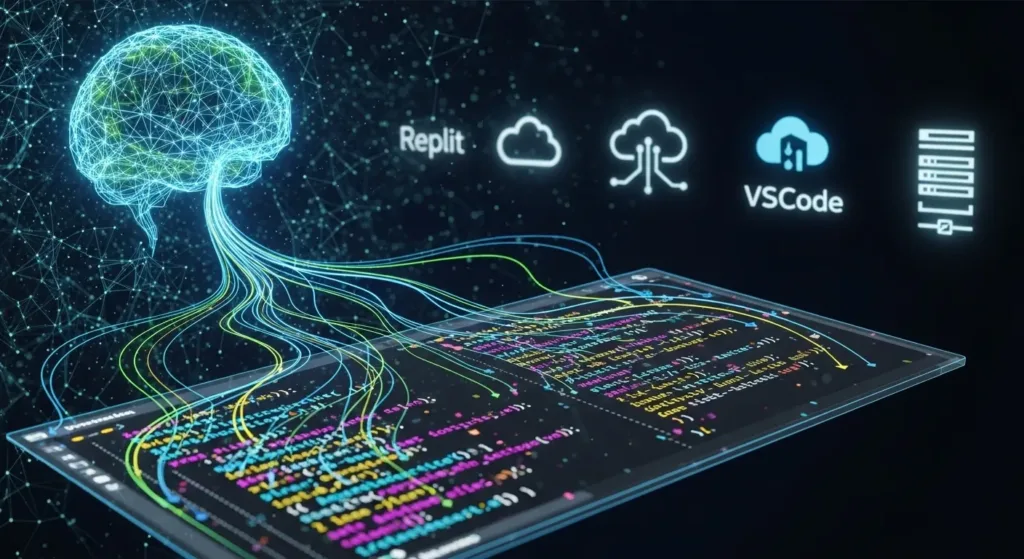
At the heart of vibe coding lies a powerful fusion of natural language processing (NLP), real-time code generation, and cloud-integrated development environments (IDEs). These technologies work together to create an environment where developers can “converse” with code.
🧠 A. Large Language Models (LLMs)
The backbone of vibe coding is LLMs like OpenAI’s GPT-4o, Anthropic’s Claude, and Google’s Gemini. These models have been trained on massive datasets of code and documentation, allowing them to:
- Understand coding requests written in natural English.
- Generate multi-language code instantly (e.g., Python, JavaScript, Rust).
- Explain what code does in simple terms.
- Catch errors or inefficiencies before runtime.
They don’t just write code — they collaborate on it.
🧰 B. AI-Enhanced IDEs
Modern platforms are integrating AI into the coding environment itself:
| IDE/Platform | AI Feature |
|---|---|
| Replit Ghostwriter | Live suggestions, doc explanations, autocomplete |
| GitHub Copilot X | Chat-based coding assistant within VSCode |
| Cursor IDE | Full AI prompt window, command-driven code edits |
| Amazon CodeWhisperer | Enterprise-grade AI coding assistant with AWS integration |
These tools allow developers to build projects in-browser, with no need for heavy local setup. That means faster prototyping and easier collaboration — essential for remote teams in the U.S.
☁️ C. Cloud-First Infrastructure
Vibe coding thrives on cloud-native stacks. Developers spin up servers, databases, and deployment pipelines directly from chat commands or AI suggestions. For example:
“Set up a Flask app on AWS Lambda with a MongoDB backend.”
Within seconds, AI can scaffold the structure and recommend infrastructure as code (IaC) templates.
🧪 D. Multimodal Interfaces
Some next-gen environments include voice, drag-and-drop, and visual feedback loops. These features make coding more immersive — particularly for visual learners or developers with disabilities.
In short, vibe coding wouldn’t exist without the AI engines, smart environments, and cloud orchestration tools now available. Together, they’re reshaping what it means to be a “coder.”

3. Real-World Use Cases from U.S. Developers
Vibe coding isn’t a theoretical concept — it’s already reshaping how developers and teams across the U.S. build apps, automate tasks, and test new ideas. From startups to solo devs, real results are emerging.
🧑💻 A. Solo Developers Building Faster
Freelance developers in cities like Austin, San Francisco, and Seattle are using tools like Replit Ghostwriter to:
- Build MVPs in under a week.
- Test code in real-time with inline suggestions.
- Collaborate with clients who don’t understand code by explaining what’s happening in plain English.
Example:
A solo dev created a functional AI-powered budgeting tool in 3 days by combining Replit, OpenAI APIs, and vibe coding style interactions.
🏢 B. Startups Prototyping with AI
Tech startups are leveraging vibe coding to reduce early-stage development costs. Instead of hiring large teams, they start with:
- A product lead using Cursor IDE or GitHub Copilot.
- Quick deployment via Vercel or Render.
- Backend logic generated and iterated in real time via AI prompts.
This approach helps teams launch testable versions of apps within days, not months.
🧠 C. Bootcamps & Coding Education
Some U.S. coding bootcamps are now integrating vibe coding into their curriculum to help students:
- Learn concepts by asking instead of memorizing syntax.
- Experiment with code safely using AI as a tutor.
- Focus on logic, design, and creativity — not just typing code.
Check out BloomTech (formerly Lambda School) and their AI-enhanced learning environments.
📦 D. Automation for Small Businesses
Non-developers — like marketers or small business owners — are using AI-enhanced templates on platforms like Zapier and Make.com to create:
- Lead generation tools
- Automated email systems
- Inventory trackers with no code but all powered by AI-generated logic
It’s coding by vibe, without ever opening a code editor.
🔗 Internal Link Suggestion
You can connect this section to a previous article like:
AI Tools for Entrepreneurs Guide
4. Benefits of Vibe Coding
As vibe coding gains traction, developers, entrepreneurs, and educators across the U.S. are discovering key benefits that set it apart from traditional workflows. Here’s how this new coding paradigm is transforming the development landscape.
✅ 1. Rapid Prototyping and Development
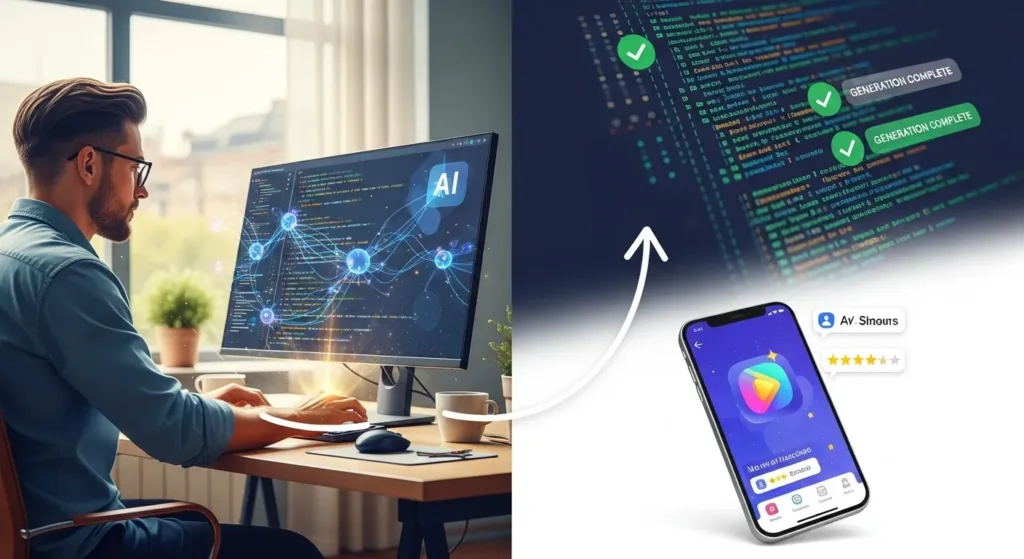
With the help of AI, developers can go from idea to working code in minutes. Whether it’s a web app, a chatbot, or a simple automation script, vibe coding drastically reduces the time to market.
🧪 Case Example: A developer in Denver used GPT-4o and Vercel to launch an AI resume scanner prototype in under 48 hours.
✅ 2. Lower Barrier to Entry
Traditional programming can be intimidating. Vibe coding allows non-experts to build meaningful software by simply describing what they want. This opens doors for:
- Educators integrating code into classrooms
- Designers building interactive prototypes
- Freelancers offering tech services without deep coding backgrounds
See our related post: Upwork For Beginners First Client 2025
✅ 3. Enhanced Creativity
When AI handles the syntax and structure, developers can focus on:
- Logic flow
- User experience
- Problem-solving
Vibe coding acts as a creative amplifier, helping devs explore more ideas faster.
✅ 4. Built-in Learning
Vibe coding environments like Cursor IDE and GitHub Copilot don’t just write code — they explain it. That makes it perfect for intermediate learners looking to:
- Understand new libraries
- Explore unfamiliar languages
- Learn best practices on the go
✅ 5. AI-Powered Debugging
One of the most powerful aspects of vibe coding is real-time error detection and debugging. Instead of searching StackOverflow, devs can:
- Ask the AI what the error means
- Get a corrected snippet instantly
- Learn why it failed
This shortens the learning loop and keeps the flow going.
🔁 Bonus: Continuous Deployment Made Easy
Many AI-enhanced environments now include one-click deployment to cloud platforms. You can code, test, and deploy — all from the same tab.
Explore Replit Deployments or Vercel for examples.
5. Challenges and Limitations of Vibe Coding
While vibe coding offers exciting possibilities, it’s not without drawbacks. Developers and organizations in the U.S. are learning that relying too heavily on AI in code generation introduces a unique set of risks and limitations.
⚠️ 1. Lack of Deep Code Understanding
AI may produce working code, but that doesn’t mean the developer understands how it works. This can lead to:
- Poor debugging when something breaks later
- Technical debt from messy or bloated code
- Reduced problem-solving skills over time
🔍 Tip: Always review and refactor AI-generated code to maintain quality.
⚠️ 2. Limited Context Awareness
While tools like GPT-4o are advanced, they can still misunderstand:
- Application-wide logic
- State management
- Complex dependencies between files
This becomes especially problematic in large-scale or long-term projects.
⚠️ 3. Risk of Over-Reliance
Relying too much on AI can cause “automation complacency” — where developers stop thinking critically and let the model decide too much.
- Decisions may be guided by pattern-matching, not best practices.
- Code may work but lack scalability or maintainability.
⚠️ 4. Privacy and IP Concerns
Some AI tools learn from your code. This raises serious legal concerns around:
- Data leaks
- Proprietary logic being reused in other contexts
- IP ownership of AI-generated code
🛡️ For enterprise developers: Check tools like Amazon CodeWhisperer which offer code security filters and opt-out features.
⚠️ 5. Tool Lock-In
Most vibe coding platforms are closed ecosystems. Once you’re in:
- You may be stuck with specific workflows or tools
- Migration to other platforms could require rewriting your code
- Features may change or disappear as platforms evolve
Choose open, well-documented tools to reduce dependency.
🧠 Internal Link Opportunity:
You may link this section to:
Compound Interest Simple Practical Guide 2025— to explore the long-term view in both finance and tech investments.
6. Impact on U.S. Developer Jobs and the Workforce
As AI-assisted development tools gain traction, many in the U.S. tech industry are asking: Will vibe coding create jobs, replace them, or simply change how we work? The answer isn’t black and white — it’s about evolution, not extinction.
👷 1. New Roles Are Emerging
Vibe coding is not replacing developers, but it is reshaping their roles. We’re seeing demand grow for:
- Prompt engineers who can “speak” to AI effectively
- AI product specialists who bridge devs and customers
- Human-AI hybrid developers who manage both logic and language layers
These aren’t sci-fi titles — they’re real job listings already on LinkedIn and Indeed in 2025.
🪜 2. Skill Ladders Are Flattening
For intermediate devs, vibe coding shortens the time to contribution. New hires can jump into projects with AI support and learn faster. This has two main effects:
- Entry-level roles are becoming more accessible
- Junior devs may need to upskill quickly to stay relevant
🌍 3. Remote Work Becomes Easier
Thanks to cloud-based vibe coding tools like Replit and CodeSandbox, even small startups can operate with:
- Fully remote teams
- Fewer full-time coders
- Faster onboarding via AI
This makes freelancing and side gigs more common, especially among U.S.-based coders and students.
🔁 4. Job Redundancy in Repetitive Roles
Certain roles may shrink — especially those focused on:
- Manual testing
- Boilerplate backend development
- Simple CRUD app creation
These tasks are often handled faster and cheaper by AI.
⚖️ Advice: Shift focus toward system architecture, product thinking, or UX-driven development where human judgment still dominates.
📈 5. Freelancers: A Competitive Edge
Freelancers who master vibe coding can offer:
- Faster delivery times
- More competitive pricing
- Broader service packages (e.g., code + design + AI tuning)
Clients on Upwork and Fiverr are increasingly looking for hybrid skillsets.
Check our article: Ai Avatar Design By Fiverr Freelancers

7. How to Start Using Vibe Coding Today
Vibe coding isn’t just for elite developers or AI researchers — it’s accessible to anyone with curiosity and a laptop. Whether you’re a freelancer, student, or working in a U.S. startup, here’s how you can dive in.
🛠️ Step 1: Choose the Right Platform
You don’t need to install anything heavy. Here are great starting points:
| Platform | Best For | Link |
|---|---|---|
| Replit | Browser-based development, fast MVPs | ✅ Beginner-friendly |
| Cursor | AI-first IDE, great for intermediate devs | GPT-4 integration |
| GitHub Copilot X | Developers using VSCode | Code explanations, tests |
| CodeSandbox | UI-focused frontend apps | React/Next.js lovers |
🧠 Step 2: Learn the Art of Prompting
Since vibe coding relies on your natural language commands, you need to:
- Be clear but flexible (e.g., “Create a login form with email and password using Tailwind CSS”)
- Test short vs long prompts
- Iterate: Don’t expect perfect code on the first try
Related read: ChatGPT For Blog Writing SEO Tips 2025
💡 Step 3: Start With Small Projects
Instead of building a full app, try:
- A to-do list with persistent storage
- A portfolio site with dynamic themes
- A Twitter bot using an API and cron job
Use these as playgrounds to test AI co-coding without pressure.
🧰 Step 4: Add Tools as You Grow
Combine your vibe coding flow with:
📚 Step 5: Keep Learning
AI tooling changes fast. Follow these to stay updated:
- Hugging Face Spaces – Open AI demos
- r/Artificial – Active Reddit discussions
- Twitter AI Creators – Follow devs who share AI prompt hacks
8. The Future of Vibe Coding: What’s Next?
As AI tools evolve and integrate deeper into our digital workflows, vibe coding is poised to become the default mode of software development — especially in fast-moving tech hubs across the United States.
Here’s what we’re likely to see over the next 3–5 years.
🔮 1. From “Tool” to “Co-Founder”
AI won’t just be a coding assistant — it will become a core contributor. Imagine a future where:
- You brainstorm with an AI partner
- The AI suggests feature pivots based on user data
- It writes code, tests it, and deploys in production
In some startups, AI will be seen as a digital co-founder, especially for solopreneurs.
🔗 2. Deep Integration with Product Design
We’re heading toward multimodal vibe coding, where you:
- Draw a mockup → AI generates the frontend
- Record a voice note → AI builds logic
- Upload a spreadsheet → AI auto-generates a dashboard
Check early signs from Uizard and Builder.io.
🤝 3. Team Collaboration with AI in the Loop
Just like Slack or Zoom changed how teams communicate, vibe coding tools will shape how teams build software together:
- Group prompting: teams co-author prompts
- AI context-sharing across team members
- Real-time debugging & reviews with LLMs watching
This will especially benefit remote-first teams in the U.S. and abroad.
🧠 4. Better AI Explainability
One concern today is that AI writes “mystery code.” But future vibe coding platforms will:
- Highlight logic flows
- Offer side-by-side pseudocode explanations
- Recommend improvements with citations
This will make AI a true teacher, not just a generator.
🏛️ 5. Regulation, Ethics & AI Literacy
With greater AI use comes the need for:
- Copyright clarity on generated code
- Security standards for AI-built apps
- Digital literacy training for new coders using AI
Governments and universities will likely play a larger role in defining how vibe coding is taught and used ethically.
🌍 “In the same way spreadsheets became essential to business, vibe coding will be essential to modern software creation.” — TechCrunch, 2025

9. Vibe Coding in 2025: Pros, Cons, and Final Thoughts
As vibe coding continues to spread through the U.S. tech scene, it’s clear this isn’t a passing trend — it’s a foundational shift in how software is written, tested, and shipped. But like any innovation, it comes with both advantages and trade-offs.
✔️ Pros of Vibe Coding
- Accelerates development and reduces time to launch
- Accessible to non-traditional coders, making tech more inclusive
- Enhances creativity and removes repetitive tasks
- Integrated learning makes it ideal for growing skills on the job
- Supports remote work and small teams with limited resources
❌ Cons of Vibe Coding
- Can reduce deep code understanding over time
- Risk of over-reliance on AI for critical decisions
- Limited context awareness in complex architectures
- IP and data security concerns still unresolved
- Tool lock-in may limit long-term flexibility
🔁 Final Recap
- Vibe coding merges AI, natural language, and code — letting developers “co-create” with machines.
- It’s growing fast across the U.S., especially among freelancers, startups, and learners.
- While it boosts productivity and innovation, it requires caution, review, and ethical awareness.
🧭 What to Do Next
- Try Replit or Cursor to experiment with vibe coding tools
- Follow AI communities on Reddit and Twitter to learn new prompting strategies
- Pair AI-generated code with your own analysis and improvements
- Focus on building hybrid skills: technical, creative, and strategic
- Stay alert to changes in AI policy, regulation, and best practices